17 New Social Articles on Business 2 Community |

- Give Your LinkedIn Profile a Professional Makeover
- Tips on Closing the Deal: The Ultimate Phone & E-mail Sales Conversion Infographic
- Intelligent, Adaptive Marketing on Social Media: Opportunities for the Pharma Industry
- Social Media Workout Routine
- Social Media & Marketing – Stop Wasting Time
- How to Launch a B2B Social Media Marketing Campaign
- Ambient Awareness in the Enterprise: The Intranet’s Role
- Reasons to Blog: A 3-Part Series from a Pro
- The Psychology of Social Sharing: Maslow’s Hierarchy of Needs
- Does Facebook Work for B2B Lead Generation? Hell Yes!
- LinkedIn Marketing For Insurance Agents
- Life OK Engages Fans With Bomb Squad Test For 2612
- 5 Essential Tools to Attract a Relevant Audience to Your Blog
- How Can You Grow Your Business on Google Plus?
- How to Write an SEO Article That Gets Results
- Content Marketing and the Power of Video [Infographic]
- 7 Steps to LinkedIn Success for B2B Companies
| Give Your LinkedIn Profile a Professional Makeover Posted: 11 Dec 2012 01:20 PM PST Nowadays it's extremely important to update your social media accounts, especially if you're on the job hunt. As of September 30, 2012, LinkedIn was noted as the world's largest professional network on the Internet with 187 million members in more than 200 countries and territories. According to the Cnet article, 93 percent of job recruiters tap into LinkedIn to find qualified candidates. Overall 92 percent of employers and recruiters already use or plan to use social media to find job candidates this year. If you are looking for a job and you play your cards right, you've got a very good chance of finding a job or making a connection leading to a job on LinkedIn. In fact, I know that it can be done as I found a previous internship through a LinkedIn group. Now, how do you make yourself stand out from the other 187 million users? There are five important things to remember when updating your profile: 1. Spice up your headline- The headline is the most overlooked LinkedIn profile section. If you look at your headline right now, I guarantee 99 percent of you still have the default headline: current company name and title. What you may not know is that you have 120 characters to make your headline your own. Keys to a great headline: showcase your specialty or your "so what," speak directly to the audience you want to attract, be specific but creative and use key words! 2. Create a "Here's what I can do for you" summary- After you draw in recruiters or potential employers, clients or customers with your headline, you have to have something to make it worth their while. This is where the summary section comes into play. You have 2,000 characters to tell who you are and what you can do. Think of this section as your "elevator pitch," as it needs to be memorable but descriptive. Make sure you write this section in first person, highlight your success, tell a story and always include your contact info. 3. Spaell Chekk: Were you able to decipher that to read- Spell Check? There's nothing more important than correct grammar and spelling. Most recruiters will immediately "next" your page if you have a simple spelling or grammar error. Bad grammar or spelling makes your page hard to read and detracts attention from your ability to sell your skills and experience. 4. Picture perfect- My suggestion is to use a professional headshot. If you don't have one, get one made. It shows professionalism, and first impressions are always important. Remember, a picture is worth a thousand words. 5. Call to action- Whether you're selling yourself or your company, always include a call to action. Give guidance on what site to visit to view more about your company or product, indicate the best way to contact you and remind them why they should want to contact you or your company. Whether you're on the job hunt or happy at your current employer, an updated and sophisticated LinkedIn profile will get you far in the professional world. Have you had success in the past after updating your LinkedIn profile? If so, how'd you make your profile standout?   |
| Tips on Closing the Deal: The Ultimate Phone & E-mail Sales Conversion Infographic Posted: 11 Dec 2012 12:49 PM PST Whether it’s a cold call, a quick e-mail followup or strategic phone meeting, closing a sale is rarely an easy process. Using the analysis on over 3.5 million sales leads, this infographic aptly titled The Ultimate Phone & Email Sales Strategy does what it sets out to do, give you a visual representation of some of some of the best practices in lead conversion. Here are some highlights:
 Infographic by Leads360   |
| Intelligent, Adaptive Marketing on Social Media: Opportunities for the Pharma Industry Posted: 11 Dec 2012 12:05 PM PST The Pharma industry is one of the most challenging industries globally; not just in terms of huge investment in product (drug) development but also in terms of market access and end-customer (patient) adoption. These challenges are driven by the heavy regulation of both product development and commercialization. The variance in the therapeutic effects in real world patient population only further complicates the pharmaceutical business. It takes a lot of investment ( 1Bn USD of expense over 10 year time frame in designing, developing and registering a new molecular entity before it can be commercially manufactured and distributed in the open market. The advertising & promotion for most drugs are heavily regulated and is usually influenced by an eco-system of governments, Pharma companies, physicians, insurance providers, equipment manufacturers, pharmacists and end-users. All of these put together makes this industry a complex maze especially from a marketer's ability to communicate effectively with the target audience. The challenge associated with assessing the unmet needs of th Social Media solutions for Pharmaceutical Industry One of the biggest strengths of social media, in contrast to traditional one-way media (TV, Print, Radio etc), is the fact that it's a three way channel which intuitively fosters collaboration; effective marketing/communication can happen by default. In the case of Pharma, multiple stakeholders interact on brand channels, neutral industry-forums, blogger platforms thereby enabling effective communications not just with the brand but also the entire eco-system within the regulatory norms. Done effectively, this ecosystem can help brands to build point-solutions for specific target audience in a timely manner. Social media can be leveraged effectively across all stages of the drug life cycle – Pre-launch (Discovery & Development), Launch and Maturity. During the pre-launch stage, social media can be leveraged for collaborating with stakeholders to co-create new drugs; to recruit patients on key forums/communities for clinical trials and to identify Key Opinion Leaders (KOLs) to build awareness and get feedback on relevance. During the launch phase social networks can be leveraged for conveying the message effectively across diverse stakeholder groups, tracking impact on stakeholders and deriving insights about usage/adoption and have a proactive crisis communications mechanism fundamentally to well, prevent crises. During drug maturity stage, social channels can be leveraged to track patient adherence, generate insights on off-label drug applications and valuable competitive intelligence in terms of tracking conversations around competing brands during this time. Benefits Social media offers a more effective media for communicating with stakeholders, especially given the constraints due to regulatory frameworks. It also offers a very measurable ROI in terms of customer acquisition, retention and growth versus traditional marketing means. Kindly share your thoughts.   |
| Posted: 11 Dec 2012 09:00 AM PST
If you want success, you need to stay committed. (Bottom-line) Here are my 3 workout goals
Building Lean Content For me, lean content is focused content that other people are not talking about. I have to stay focused. On the Midwest Labs Blog, I try to focus on topics surrounding lab analysis. These topics could include posts regarding Agriculture, Science, Health and Nutrition. By keeping this focus, I am able to connect with a specific audience. I do not talk about social media on this site. Also, on this site, I try to give you a perspective of what works and does not work from a Marketing Director's standpoint with respect to marketing and social media. Each day, I know if I have succeeded or not succeeded in accomplishing this goal and I watch it very closely. Doing Interval Training For me, I am on social media and then I am off. I may be on for a little bit by listening and reading other posts or engaging with others with my personal brand or company brand, see yesterday's post. I don't have time to be on all day on Twitter or Linkedin. I have other responsiblitiaties. However, when I am on, I am on. For me, I have found this approach to be most effective in managing my time spent on social media sites. Taking a Break Believe it or not, you do not have to post everything that happens in your personal or professional life to be successful. You can also take weekend time off. It's very healthy. If you go a day without going online, you are not going to miss out. If you have a day of meetings, that is ok, its a part of business. Taking breaks is really the healthy approach to using social media. Monitor Results Just like someone who works out and checks their weight, people should also monitor their efficiency. Google Analytics is an awesome tool for monitoring results. Change Up Your Routine Don't do the same thing everyday. Find something that works for you and stick with it. If something is not working, change it. You have to find a routine that works for you that gets you results. This is my workout routine! How does yours look? I am guessing there are a number of similarities. photo credit: Usodesita via photopin cc   |
| Social Media & Marketing – Stop Wasting Time Posted: 11 Dec 2012 08:00 AM PST
When talking to other marketing professionals, the topic of trends always comes up… More people are accessing websites on their smartphones – Is this newsworthy? Some executives are not on social media at all – Are you really surprised? Content is growing on blogs and websites. – I would hope so if you have a blog or website. Facebook is one of the largest countries by itself – Do you have contact with millions of fans on Facebook? Google+ is still underutilized – Ok, so if I just connected with someone on Google+ is that strange? Linkedin is a great place to connect with others and learn about their businesses. MARKETING NEWS NEEDS A FRESH CHANGE IN 2013 For me, I have decided that I need to really focus and spend time connecting with people who are more advanced in the areas of social media and marketing in general. I want to connect with people who provide EXAMPLES and STRATEGIES of how they have used these channels to improve communication, branding and engaging with their clients. This equates to more clients and more sales. TIME MANAGEMENT We only have so much time in our day. Why should I spend my time reading the same, dry information regarding trends and information that I already know. I want something fresh. 2013 WILL BE THE YEAR OF INCORPORATING MARKETING INTO OUR PROCESSES USING THE IPAD If you have not read the story, read last week's post, "Marketing Internally and Externally". Our CEO is right, its time to stop reading and waiting for someone to use the new technology and social media platforms. It should be about working as a team at our own places of business to effectively meet the needs of our clients. photo credit: 96dpi via photopin cc   |
| How to Launch a B2B Social Media Marketing Campaign Posted: 11 Dec 2012 07:40 AM PST
Business-to-business (B2B) companies are increasingly aware of the benefits that can be gained from engaging in social media. And believe it or not, there are lots of B2B companies still on the fence about adopting social media. They’ll get there – in fact, maybe this is what they need to get started. In nearly every marketing study, the number of companies who plan to adopt or increase their social media presence is increasing. A lot of B2B companies I speak to have indicated that one of the biggest barriers to launching a social media campaign is not knowing how to get started. Some of that is due to a lack of personal and institutional knowledge of social media best practices. Getting started setting up a social media campaign should not be a problem, thanks to Optify's 21-page e-book "How to Build a Social Media Campaign." “What is Social Media Marketing? Conducting a social media marketing campaign means actively starting conversations online, pushing content, asking questions, driving traffic and expanding visibility. As you create links and blog mentions, interested consumers see these and click through.” Despite being only 21 pages, the e-book covers a lot of ground and is more a primer on Internet marketing than just social media. The guide consists of 7 chapters and can be a great start for B2B companies new to social media, as well as a good refresher for the more experienced. Step 1 – Plan Your Campaign – Surprisingly, this is the part that many social media campaigns don't seem to have. In just one page, the guide shows you how to address your goals, audience, message points, social media channels, timing, measurement and crisis planning. Step 2 – Create Great Content – Content is the most important part of any social media marketing campaign. Social media expert Jay Baer has framed social media and content this way: "Content is the fire. Social media is the gasoline." Step 3 – Set Up Landing Pages – This covers where on your site to place all the content that the social media will help generate, as well as how to ensure the content can be easily found by search engines. Step 4 – Create Optimal Lure Language – Each social media channel like Twitter or LinkedIn requires different types (and lengths of messages) to invite visitation to the content on your site. Step 5 – Distribute Links via Social Media Channels – Covers onsite and offsite optimization. Onsite refers to what you do to optimize your social media presence on your website, whereas offsite optimization is everything that helps with your different social media channels. Step 6 – Track & Monitor Your Campaign – That which can be measured can be improved! The guide includes a concise matrix of measurement and analytics that should be considered, along with the tools that can help accomplish that. Step 7 – Iterate and Refine – Social media marketing should not be a "fire and forget missile." Given the rich measurement data generated by social media marketing, you should constantly measure and do more of what's working. And less of what's not working. What do you think? Please share your comments below. Click here to download a copy of "How to Build a Social Media Campaign” (form submission required). photo credit: DVIDSHUB via photopin cc   |
| Ambient Awareness in the Enterprise: The Intranet’s Role Posted: 11 Dec 2012 07:00 AM PST Are you one of those people who shake your head at the thought of sharing status updates with co-workers, and think, "What will these people think of next?" It turns out these seemingly trivial snippets from your co-workers are actually good for you and your company. It's all because of a phenomenon called "ambient awareness." What Is Ambient Awareness?Ambient awareness is a sense of connection and knowing about other people without being physically together. It's the result of having constant contact through social media. It's a kind of "omnipresent awareness" of what's going on in other people's lives. Taken singly, these individual status updates mean nothing. But they form a comprehensive picture of a person's life. Ambient awareness may have begun with texting. Today, ambient awareness is attributed to participation in social networks like Facebook and Twitter. Benefits of Ambient AwarenessWhen it comes to our interpersonal relationships, ambient awareness has several benefits. Strangers no longer seem like strangers, even if you've never met each other in person. And when you do meet in person, your conversation is fed by ambient awareness. You no longer have to ask, "How've you been?" because you know. Instead, you can plunge into deeper conversation about something the other person posted about recently. Importance in the EnterpriseEven in a business context, ambient awareness may have its uses. The most obvious one, of course, is enhancing interpersonal relationships at work. With ambient awareness, we feel like we know our co-workers better. This is particularly important in organizations with a geographically dispersed work force. Sharon Odea says ambient awareness leads to more empathy and trust in the workplace. But aside than enhancing relationships, ambient awareness can improve 3Cs: collaboration, cooperation and coordination. It can "surface opportunities (emergence), have the best people on the right tasks, and generally have the ability to be more responsive and adaptive." (More on this here) One term used to describe this situation is "networked productivity." Generally, when people are on the same page about a project or goal, and feel good about working together, then higher productivity can be expected. Odea also noted that ambient awareness leads to be better understanding of what the organization is doing. This contributes to productivity as well. How to Use the Intranet to Promote Ambient AwarenessTo achieve ambient awareness in the workplace, you need a social intranet with an activity stream. Noodle intranet, for example, has a status update feature which creates an activity stream. The default question is "What are you working on?" However, as you can see, this stream quickly turns into a sharing of personal updates as well. The ability to comment on updates can lead to some interesting "conversations" — some of which can lead to collaborations outside of the activity stream. Being able to embed hyperlinks, photos, videos and other media also makes the updates more information-rich, interesting and compelling. Some companies have a rating function in their activity stream, similar to Facebook's "like" button. This can be useful, but it can also lead to fewer people actually commenting on a status, because they feel that "liking" or giving it a thumbs up is enough. How about you? Could your workplace use more ambient awareness? How are you currently achieving this? Or what can you do to encourage it more?   |
| Reasons to Blog: A 3-Part Series from a Pro Posted: 11 Dec 2012 06:30 AM PST This is the first installment of a three-part series about blogging. In the next three posts, we will discuss numerous reasons you should start a blog, how to start your blog, and fine-tuning your blog for success. Blogging is one of the best ways to get your voice heard. In 1998, I started blogging because I had something to say, but no easy way to get it published and be heard. I wrote about music, photography, travel adventures, current events, sports, and anything else that I had an opinion on. My reasons for starting my first blog may be very different from your reasons to blog, but nonetheless, you're blogging! 8 Reasons to Blog:
What Type of Blogger are You?The Family Member: The family blog has replaced the family newsletter. The family blogger wants to keep family members and friends in the loop with all significant family events. It's an easy way to correspond with people you know so they can keep tabs on the kids and all of the family adventures. Vacation tales, photos, school progress reports, and anything under the sun makes for great topics for a family blog. The Hobbyist: The hobby blogger blogs about anything that comes up. Much like how I started, the hobbyists blogs because they want to be heard on various topics. Sometimes there are goals attached to the site and sometimes there are not, but the hobbyist blogs for the sake of blogging. These are usually passionate people who need an outlet to be heard. The Specialist: The specialist blogs about specific topics with a laser-like focus. These bloggers want to recognized as subject matter experts and if their content is good enough and they keep blogging — they usually will. There is more strategy involved here than in the previous two categories of bloggers in order to get site traffic. The specialist blogger is always thinking about ways to monetize their site and grow revenue. Mommy Blogger: I hesitate to use the term Mommy blogger as some people embrace it and some try to run from it. The Mommy blogger is a woman, typically a mother, who writes about topics that are interesting and helpful to other mothers and women. Fit Fabulous Mom by Shadow Asgari is a great example of a "Mom Blog." These women are powerful bloggers because many look to them for their opinions on a variety of parentood-related topics. The Journalist: The journalist blogger reports on issues and topics that are assigned to them or they pitch content editors and owners of other sites. There has always been an argument whether or not bloggers are journalists. My opinion of this topic is simple: If a blogger adheres to the same fact-checking standards that journalists are held to, then yes, they should be considered journalists. I believe it is a matter of standards and not the platform they choose to publish their work. The Marketer: The art of content marketing is when a blogger publishes articles to gain market position for their product, services, or brands. This is a great way to become top of mind to your audience in your desired vertical. When publishing content on your company's blog, the main idea is to be helpful to your audience. There's no need to overly self-promote. The audience knows what you do — remember they're on your site reading your article. Be helpful, post content of value, and try to tell your brand story to keep your audience engaged. Keeping the audience engaged is key to growing revenue by blogging. Maximize Your Blog ContentAs business owners, I can't stress how important it is to make your voice heard. When you add blog content to your site you are letting the public (i.e. your clients) get a real sense for who you are and what your brand stands for. Here are three simple tips to maximize the content you post to your blog: • Be Helpful, Solve Problems, Be a Hero: Helpful, timely tips are a great way to develop loyal site visitors. Write articles about how to save time, save money, or solve someone's challenge and soon enough you will be relied upon as an expert in your vertical. • Don't Be A Marketer or a Salesperson: You know the old saying, "No one likes to be sold, but everyone likes to buy" — no where is it more applicable than on your blog. The quickest way to lose an audience is to constantly tell them how wonderful you are or what deals you're having. Instead of selling, refer to point one, and solve someone's problem. • Use Your Blog as a Way to Answer FAQ: I keep a running list of questions clients and prospects ask me about WordPress. Chances are, if people ask you these questions in person or via email, others are searching for answers to the same questions. What questions do clients ask your team? Make a list and develop content to answer those questions. Your blogging persona matters less than understanding why you want to start your own blog. You can start a blog to be heard, keep in touch with family and friends, gain respect in your industry, or drive revenue. Whatever your reasons to blog are, just go for it and start putting your thought into words and into your readers' hands. Post two will talk about how to start your blog and deliver a step-by-step plan for you to get blogging. Do you blog? Leave a comment and let us know what your reasons to blog are and how you got started. Thanks!   |
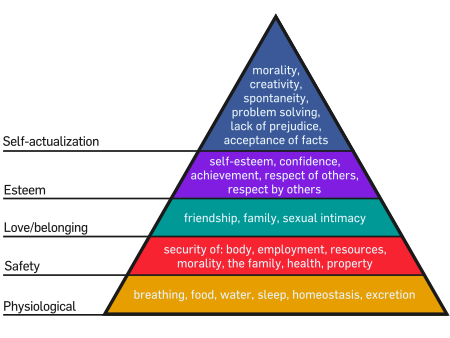
| The Psychology of Social Sharing: Maslow’s Hierarchy of Needs Posted: 11 Dec 2012 05:40 AM PST It is clear that there is a real strong correlation between psychology and the act of social sharing. As a B2B marketing professional trying to create your social media and content strategy, having a basic foundation of human psychology can help amplify your efforts, more effectively reach your audience, and encourage your customers to share your message. But how do you get your audience to share? By understanding the psychology behind human motivations, you can have greater insight into how to target your audience. In 1943, Abraham Maslow, a prominent American psychologist created Maslow's hierarchy of needs to explain fundamental human behaviors. By being conscious of the motivations behind need fulfillment, you can better understand how your message will resonate with your audience and create campaigns that your audience wants to share. Maslow's Hierarchy of NeedsPhysiological Safety Love/Belonging Esteem Self- actualization What can be learned?A lot can be learned from Maslow's basic explanation of human needs and this can easily be translated into what motivates people to share. Social media fosters a strong sense of group mentality–learning from your peers, being recognized by your peers, relaying on your peers for that sense of belonging. As a marketer, keep this in mind when both developing your content and your social campaigns. Always ask yourself what need your campaign is fulfilling.   |
| Does Facebook Work for B2B Lead Generation? Hell Yes! Posted: 11 Dec 2012 05:15 AM PST To the folks out there who say that Facebook is not an effective lead generation tool for B2B, I will tell them that they need a new strategy. Facebook boasts the largest user base of any social network and it's essential that you have a presence here or your business will l simply be missing opportunities. Over the past few months I have been experimenting with different types of ads, new content, eye catching visuals, and tracking my success using Marketo and Facebook insights. What I have found out is that in order to have success, you need a perfect storm of content and tactics. In the data below you can see that in August I ran only standard Facebook ads along with a few promoted posts. In September I began focusing more on Promoted Posts in addition to standard ads and the number of targets went up while cost per target went down. In October Marketo released the Definitive Guide to Social Marketing and I added more budget into standard Facebook ads to promote it. As you can see, the cost went up along with cost per target. In November I put a heavy emphasis on Sponsored Stories and utilizing Marketo's new publish a landing page to Facebook feature, and launched a new custom Facebook app. Focusing less on standard Facebook ads and mixing it up with engaging apps and running promoted posts around our custom Facebook tabs, we were able to generate a record number of targets at a cost per under $7.00. Facebook is now our number one program for generating targets for the month of November. What's the takeaway here? If you have limited budget, focus on Promoted posts and Sponsored Stories. The fact that we used these types of ads around our Marketo landing pages within Facebook gave us even a higher boost in engagement. I think this is because we were keeping folks within Facebook instead of sending them to an external landing page. Here is the hard data. We are not even finished with the month of November, and you can clearly see how the inclusion of custom Facebook tabs, promoted posts, and Sponsored Stories are clearly the winners for driving both engagement and prospects. Here are a few tips for success in using the tactics mentioned above.
Now it's your turn. The strategy that I use here at Marketo can easily be replicated and customized for both B2B and B2C companies. It's all about how much time and effort you really have to invest. For more information and details around how we use social media for inbound marketing, check out our brand new ebook How to Optimize Social Media for Lead Generation.   |
| LinkedIn Marketing For Insurance Agents Posted: 11 Dec 2012 04:30 AM PST
Now, of course, every social network has its merits as a marketing tool. Social media marketing through Facebook and Twitter can be really effective in building awareness and driving website traffic. The strange thing is, while insurance agents have slowly come around to the benefits of social media marketing, LinkedIn marketing hasn't really taken off. Most agents have created pages but the majority sit unused and out of date, gathering dust alongside so many other discarded ideas in the marketing basement. But insurance agents, particularly those who specialize in commercial lines, shouldn't ignore LinkedIn marketing. It's the ideal place to turn a small, local agency into a powerful B2B operation. You just have to know how to use it. Make a Connection or 500LinkedIn is all about connections. Like friends or followers on other social networks, your connections are the people who you engage with every time you post something on LinkedIn. Connections have three key effects that benefit a small business. First and foremost, it's an excuse to start talking to a prospect. Simply find a company you'd like to deal with and find the appropriate member of staff and connect. This may feel a little like cold calling, but most people are very happy to connect on LinkedIn, because they want to build their own networks too. Connections are also great for building trust and credibility. The more connections you have on LinkedIn, the more trustworthy you look. They can also be really helpful for moving someone from a connection to a lead. LinkedIn displays your connections in common, so you won't appear as a stranger, you appear as a friend of a friend. Premium PrestigeSpeaking of credibility, another easy way to improve yours is to upgrade to a premium account. Don't be fooled by the added functionality offered by upgrading, that's just the icing on the cake. Going premium is most important for LinkedIn marketing. When you go premium, you get a little badge on your profile that confirms you have a premium account. So much of marketing, and LinkedIn marketing in particular, is about image. You are an expert in insurance and risk management; a premium LinkedIn account adds weight to that image. It also allows you to see who's viewed your profile, which can be really useful in identifying potential connections and potential leads. Post, Promote, ShareIn order to be effective in online marketing, you need content. Ideally you should be producing the majority of that content yourself, but you can supplement it with content found elsewhere. When you share that content through LinkedIn, it will be presented to your connections along with any comments you want to add. This offers the opportunity to instigate a little debate or simply increase awareness. If you create your own content, you demonstrate your expertise and give prospects even more reason to deal with you. The key is sharing in the right places and to the right people. If someone asks a question or posts an update on a topic you have blogged on, respond and include a link to your blog. You don't need to throw the sales patter at them or tell them about yourself. You just post the link and tell them it might help. The blog and your on site call to action does the rest for you. You just need to find the right people to share to. Join ForcesWhich brings us to groups. If you're on LinkedIn, you should be in groups. Any facet, of any industry you can think of, has a group on LinkedIn. Within the groups you can start or reply to discussions, post comments and make connections. If you join groups that your prospects are likely to be in and add useful, insightful content, you can grow your connections and prospect lists in a very short space of time. Putting aside the LinkedIn marketing advantages for a moment, groups are also a great place to discuss industry topics. You can talk to peers and producers and tease out important issue. LinkedIn marketing is social media marketing on a completely different level. It takes all the elements that makes social a useful channel and places them in a space where only viable prospects exist. Marketing through social media may not be for everyone. LinkedIn marketing should be a priority for every insurance agent. Get ahead of your competitors and stay there with the help of social media marketing! Download our free whitepaper ’The Definitive Guide to B2B Social Media’.   |
| Life OK Engages Fans With Bomb Squad Test For 2612 Posted: 11 Dec 2012 04:00 AM PST Life OK is the youngest entertainment channel to hit the Indian television viewers with its unique positioning that goes beyond melodramatic serials to more realistic and inspirational ones. In keeping with its philosophy of 'cherishing what you have', Life OK has launched a new show '2612' based on the terror attacks that rocked Mumbai and the world on the 26th of November 2008. The new show, on air since the 26th of November, aims to unite the nation to fight the bigger evil and get people to be more alert. The channel has lined up an interesting promotional strategy in an endeavour to get maximum reach across the country by leveraging both offline and online channels. Beginning with a felicitation event for the unsung heroes at Cafe Leopold prior to the show, the channel is spreading the word through various digital media. It has launched a bomb squad test on its Facebook page that asks fans to crack the location of a suspected bomb blast site with the help of five clues. The answers to the clues will be hidden on the LifeOK Facebook page, Twitter page, LifeOK website and SMS-based hints from within the show. Each clue will take the user closer to the destination where the bomb (as per the game storyline) has been planted. Ten winners to get all five clues right will win gift vouchers worth Rs. 500. Let us explore. About the 2612 bomb squad test appThe contest has been hosted on a Facebook app which welcomes you with the required information about the bomb squad test. There is also a button to get more information about the show in addition to the Terms & Conditions link listed at the bottom. Once clear with the T&Cs, you can proceed with the bomb squad test. There is no need to 'like' the page as it is an open contest. A screen shot like the one above welcomes you with the map and the first clue giving the whereabouts of a terror suspect in the South-western region in India. The clue has a link that takes you to the Facebook wall from where you are supposed to unearth it. Clue 2 is a tweet which provides a link whereas clue 3 is an image on the channel's website. Clue 4 needs the participant to watch the trailer of the show on the YouTube brand channel and sms it as a short code. The final clue is a question, the answer to which lies in the episodes aired during the first 3 weeks of the show. All the while, the participant zooms closer to the destined location with the clues. At the bottom is your 'Search progress' displaying the status of the clues you have cracked. I've been able to successfully crack four clues and am now at the question in clue 5, for which I have to watch the episodes. How cool is the bomb squad test?For a thriller show, this is an awesome game that not only engages the community but also helps bring them closer to the show's theme and message. The thriller game concept is not unique though. The Louis Philippe Autumn/Winter collection 2012 was launched as a game too. Users were required to solve the mystery of the missing wardrobe on Facebook to be able to discover the collection. The game too involved finding clues but clues were within the app itself. Bomb squad test had clues hidden on its various digital properties. The game experience is not so thrilling. But, the most striking aspect of the game is the location and manner in which clues are spread across various platforms. I was able to crack the clues quite smoothly as scanning through the brand's digital properties be it the Facebook timeline, the Twitter page or the website was quite simple. It was cool fun taking the bomb squad test and it would have been better with matching incentives for the winner – a Rs. 500 voucher is not so tempting! The app has been designed well and works perfectly without any glitches. Moreover, the execution and navigation add to the user experience making it a thrilling one similar to the show. Social media platforms have been well integrated in the campaign to bring about maximum visibility in the digital communities. It remains to be seen how well the show catches up on television. Nevertheless, it is important to weave in a good media mix comprising social media especially for your television shows in this closely connected online world. And the show does that nicely! What do you think?   |
| 5 Essential Tools to Attract a Relevant Audience to Your Blog Posted: 11 Dec 2012 04:00 AM PST It is not difficult to drive traffic to your site but what's the point if visitors don't stay around and read your blog post, sign up to your email list or buy your product or service? We're all familiar with the following saying: "Traffic is Vanity, Conversion is Sanity!" Well, maybe you're not familiar with that saying because I just made it up. But it does make sense! Let's look at five great social media tools to ensure you attract a relevant audience to your blog posts. 1. Tweet at the Optimal Times using SocialBroThe people that follow you on Twitter are some of the most likely targets for your blog post but you need to have a strategy for reaching them. One part of this is timing the delivery of your posts to try and get the attention of the majority of your followers. SocialBro is a social media management tool. One key feature is that it works out when your followers are online. This is not going to be 100% accurate but gives you a good idea of the best times to tweet. At 8am only 31% of my followers are actively tweeting but over 77% are active at 3pm in the afternoon. I'm based in Europe but focus on the US so it makes sense that more of my followers are online in my afternoon which is the morning in the US. It also makes sense to tweet at 8am and at 3pm because I want to attract the attention of my European followers also. Action: Consider SocialBro or similar tools to work out the best time to tweet 2. Target People Who Know You Using Google AuthorWhen you are searching through Google for content you often see the authors picture displayed in the search results: The person in the picture is Amy Porterfield. As I know Amy and value her as an expert in her field I am more likely to click on this post in the search results. Getting your picture displayed as part of the search results is called Google Author and can help to not only get people to read your post, but it also helps readers to connect and become more familiar with you so that they will recognize your posts immediately going forward. Action: Set up Google Author. Follow this link to read step-by-step instructions on setting this up How to setup Google Author Rich Snippets 3. Promote Your Post Using WiseStampMost of the people you are emailing on a daily basis are potential subscribers to your blog. Encourage them to read your latest blog post by including a link to your latest post in every e-mail you send. Action: Add your latest blog post to your signature using Wisestamp or similar tool. 4. Encourage Your Readers to ShareBy attracting a relevant audience it is more likely that their network would also be a relevant audience. Encourage your readers to share out your content to their followers. I use the WordPress plugin DiggDigg The reason I like it is that when readers are scrolling down through the blog post it automatically moves with the reader so there's always the option to share at any point. Action: Make sure that you actively promote the option for social sharing. It's not enough just having it at the very top of a post. How else can you encourage people to share? 5. Find Relevant Keywords Using Google Keyword ToolOne of the most important elements of optimizing your blog post for Google is the Title Tag. This is not visible on the page but it's something that Google reads when it is figuring out how to index your content. If a librarian thinks a history book belongs in the Geography section then how will the historians have a chance of finding it! So help Google index your content correctly by doing some keyword research using Google Keyword Tool and ensure you give Google sufficient clues regarding what your content is about. The following shows a search for 'social media strategy'. In the Global monthly searches column Google shows you the average searches per month over the last 12 months. It also shows a list of similar keywords with the number of monthly searches. Google also looks for a description which is not used for indexing but is displayed in search results. It's also very important to include the correct description to ensure you are only attracting people that are relevant. Action: Perform keyword research for every post and ensure you have the option for configuring the page title as part of your content management system. SummaryWe get caught up too much with numbers. How many visitors you have, how many fans on Facebook, how many Twitter followers? But it's not all about volume. How many relevant followers to you have? How many relevant readers are you interacting with? What are your tips and tools for attracting a relevant audience? We would really love to hear your thoughts.   |
| How Can You Grow Your Business on Google Plus? Posted: 10 Dec 2012 08:25 PM PST Are you using Google Plus to grow your business? You might be missing out on a ton of leads and potential business growth. You see, if you use the network effectively you can easily drive interested prospects to your capture page and business website. The secret to effectively using Google Plus lies in giving freely of your time and talents while making connections with an increasing number of people from within your niche. Do this on a consistent basis and you will have no issues growing your opportunity on the social network. If you treat G Plus like a spamfest, sending out business link after business link, you will likely repel prospects. This is not the way to expand your opportunity on the social network, as giving freely is the quickest way to expand your business. Giving Freely Means Posting Usable Content on a Persistent BasisAre you using the true power of Google Plus by giving content away freely? Few people hit G Plus up with usable, fresh content on a daily basis. By posting usable content I mean to post stuff that people can read or view, digest quickly and use for their benefit immediately. Do this and you will have no issues generating leads on the social network. Churn out your own relevant blog posts on a daily basis and post these updates to Google Plus. Also post other relevant, fresh posts from authority blogs within your niche to drive a steady flow of traffic to your capture page and business website through the social network. Effective Plussing means persistently sticking to this value-driven approach, no matter how tempted you feel to turn G Plus into the spamfest that many use the network for. Resist this urge to take shortcuts. Focus instead on bringing value to the network and you will receive value from your Google Plus buddies, as they promote you persistently and you grow your home based opportunity. Posting Pictures Is the Popular Thing on Google PlusFor some reason people seem to really dig pictures on Google Plus. Why? Bright, shiny pictures seem to grab people's attention on the social network. How can you effectively post images on G Plus? Well, aim for posting 3 to 5 attention-grabbing images daily. Posting pictures of animals, funny pics that is, or posting images of tropical locations, or your latest vacations, all seem to vibe with the average Google Plus user. Note that you do not want to go overboard on the network, as you cannot simply post images all day and expect to grow your business. You need to stay on topic most of the time, simply posting images a few times daily to snare the attention of people who have you in their circles. Posting images persistently presents your G Plus buddies with an irresistible form of eye candy which helps people to get to know you better, as they Plus 1 and comment on your stunning images. Again, do stay on topic. Avoid posting 10 or 20 pics daily as this simply clogs up the stream and confuses your target audience. Persist Like Heck to Drive Leads through Your Google Plus ProfileAhh, the persistence factor. Few and far between are people who actually grow their businesses on Google Plus because most people refuse to bring value to the network on a daily basis. You cannot operate in fits and starts and hope to grow your business. This will not happen. Simply create value on a daily basis, every day, and good things will happen to your business. Not everyone in your circles is going to see what you are posting everyday and showing up on a regular basis will increase the number of eyes that fall on your posts. Becoming a regular presence establishes trust and authority. You will make more connections and the more connections you have, the greater the odds of attracting interested prospects. Use these tips to grow your online business on Google Plus today.   |
| How to Write an SEO Article That Gets Results Posted: 10 Dec 2012 06:45 PM PST
  |
| Content Marketing and the Power of Video [Infographic] Posted: 10 Dec 2012 04:20 PM PST There's no denying that video has become an increasingly powerful tool for content marketers. But it's not just that video is big right now – it's that it's getting bigger. Earlier this year, Social Media Examiner reported that video was the number one area where marketers planned to increase their investments for 2012. As a result, online video usage rose 12% amongst B2B content marketers, according to a recent Content Marketing Institute (CMI) survey. For companies, interest in video content is obviously linked to the popularity of online video in general (in case you haven't heard, YouTube averages 4 billion hits each day). And the rise in tablet adoption has certainly made videos more accessible for mobile viewers as well. But the truth is, video production has also become easier (and less costly) than ever before. As CMI founder Joe Pulizzi points out, the combination of new technology and the sheer cost of video production has reached "a point where there are no barriers to entry" for companies. So what role is video playing in the world of content marketing today? We compiled some of the most compelling numbers and use cases from around the Web to help tell the story of online video marketing and the different ways organizations use it to drive more business. You can download the infographic here, and visit www.brainshark.com to learn more about using online video presentations to enhance your overall marketing strategy. Download Our Free Video Marketing eBook   |
| 7 Steps to LinkedIn Success for B2B Companies Posted: 10 Dec 2012 03:54 PM PST Do you want to increase sales, while decreasing the length of your sales cycle? Whether you are a construction company or a goods distributor, a well-executed LinkedIn strategy is your solution for B2B lead generation. If you are a business that sells B2B and you are not on LinkedIn already, you are missing out a huge opportunity to build brand trust and generate leads for your company. This massive social network of professionals has made it easy for businesses to highlight their expertise and heighten brand reputation, resulting in a shorter and easier sales process. Step 1: Optimize your individual profileBefore you set up your LinkedIn company page, you will need to have an individual profile. Don't be tempted to jump into creating your company page before you have completely finished your personal profile. Your personal page will be traceable to your company, so you want to make sure it reflects the best professional image possible. The process for setting up a company page will be the most streamlined if you register your personal account under an email address at your business domain. When you set up your personal profile and add your employment information, your headline will automatically default to your current job title. Make sure that you manually edit your headline to be more descriptive, and better reflect your personal brand. Step 2: Get ConnectedNow it's time to add all of your business contacts. If you go to Contacts- Add Connections, you can invite your existing email contacts. Tap into your existing social networks, by posting a link to your profile on your Facebook or Google+ pages asking your friends to connect on LinkedIn. Create a new email signature that includes the LinkedIn icon that links directly to your profile. Step 3: Optimize your Business PageTo create your company page, go to: Company- Add a Company. Upload a professional looking logo and a header image, and complete the about, specialties, and company info fields. Ensure that you are using all of the keywords that you want your company to be found for, as LinkedIn company results are starting to display in Google searches (I've even seen them display before company websites on occasion). You can post status updates as a business page manually or through HootSuite. Use the status updates to share blog posts and press releases.
You can add up to 25 products and services to your LinkedIn company profile. Use these spots to highlight your most popular products/services, and include a good descriptive blurb about how your offerings make your client's lives easier. Make your products pages even better by adding a video clip via YouTube, and add yourself (or your colleagues) as the employee contact for the particular offering. Step 5: Connect with Target BusinessesYou probably already have an idea of some companies that you want to target. Make sure that you personally follow their company pages, and post comments or share their posts if relevant to your field. You can also use the search function to locate other prospects in the industry that you target. Step 6: Join & Participate in GroupsLinkedIn groups allow you to engage in two-way communication and share your expertise with other professionals. Having a strong presence in groups is a great way to increase your brand awareness. Although participation is as an individual, and not a company, as you engage with other members, they will be interested to click through to your personal profile, and will become familiar with your company's brand name. You can also use groups to share any content that you may have that is relevant to discussion, directing group members to your company page for recent blog posts, whitepapers, etc. You can also use the search function to discover groups where professionals from your industry are congregating and communicating. Browse the groups that show up when you search the industry that your target client is a part of, and join the most active and most relevant groups. Don't get stuck only joining and engaging with the largest groups, especially if your services are geographically limited. You can also create your own group. For a boost in SEO value, create a group named with the keywords that you'd like your business to be found for on Google. Invite existing customers and connections, and maintain a good level of activity, and your group will grow in little time. Step 7: Show your Expertise in AnswersAn additional way to use LinkedIn to establish your reputation as the industry expert is to participate in LinkedIn Answers. To find this section of the website, go to: More-Answers-Advanced Answers Search. Now refine the open question results by keywords related to your industry, and submit answers to any questions that you can provide good insight into. You can even cite resources (read- your website or blog) to support your contribution. If you want to learn more about using the web to drive B2B lead generation, download our free guide.   |

 e multiple stakeholders in the health care value chain (Patients, Physicians, Payers and Regulators) is primarily that of communication and it begs for an effective solution that satisfies the channel and content requirements of different stakeholders.
 What does your routine look like? Do you get on social media sites and stay with your plan, or do you drift, and lose focus.
 THE CURRENT STATE OF MARKETING & SOCIAL MEDIA
 B2B companies who adopt social media marketing are able to reach current and prospective customers more efficiently, and track the effectiveness of their marketing dollars.




 Social networks are for kids. They're just places where teenagers and college kids share pictures and videos of themselves doing stupid things and chat about nothing. They have little to interest insurance agents. That used to be a pretty accurate description of all social networks. That was until LinkedIn came along and created a social network that offered huge advantages to business people in every industry.


 You may be a great writer, but if you don't write your web articles in a way that is SEO-friendly, you may be merely talking to yourself online, without any readers except for your mom. So how do you write articles that are interesting, but that also have great search engine optimization, making them come up towards the top of search results for the topic? Here are some tips to write an SEO-friendly article:


| You are subscribed to email updates from Social | Business 2 Community To stop receiving these emails, you may unsubscribe now. | Email delivery powered by Google |
| Google Inc., 20 West Kinzie, Chicago IL USA 60610 | |

Niciun comentariu:
Trimiteți un comentariu