25 New Social Articles on Business 2 Community |

- Event Recap: The Future of Social Media
- Seven Unexpected Ways Your Business Can Gain From Pinterest
- The Social Networking Companion to Julie Littlechild’s Client Engagement Roadmap
- Google+ and SEO: How G+ Can Optimize Your Content and Improve Search Results in 5 Easy Steps
- Flattening the Classroom Walls with Social Media
- The Human Impact of Social Marketing
- The Two Faces of Social Media Buzz
- Never Doubt the Dominance of a WordPress Website (Infographic)
- Online Communities vs. Black Friday Sales: A Tale of Two Strategies
- Putting Cyber Monday into Perspective
- Do You Know the Value of Your Email Newsletter Subscriber List?
- When Social Media Complements Telemarketing
- Social Media Mistakes You May Be Making
- What Babies Named Facebook and Hashtag Say About Social Media
- How StumbleUpon Can Boost Your Online Presence
- Marketers Name Their Most Admired Brands
- How to Spot a Twitter or Facebook Hoax
- Dear Social Media Leaders, Practice What You Preach and #BeHuman!
- Cafe Coffee Day Embeds Social Media Into It’s First TVC Sit Down
- Social Media Practices to Expect in 2013
- 4 Tips to Create a Killer Social Media Strategy
- The Art of the Social Apology: Lessons from No Doubt and Nokia
- Stella Artois Delivers Personalized Holiday Greetings via Facebook
- Culture of Corporate Giving Helps Darden Feed the Hungry
- Bruce Willis, Barack Obama and Others Have Tweets for You… Say What?
| Event Recap: The Future of Social Media Posted: 04 Dec 2012 02:26 PM PST It's that time of year, not only are we celebrating the holidays, but we are also figuring out our 2013 resolutions and plans for ourselves and businesses alike. This afternoon I had the opportunity to attend Business2Community's "Future of Social Media: How It Will Impact Marketing, Sales, and Customer Service". The featured guests were Pam Moore, CEO and Founder of Marketing Nutz (@pammktgnut). Anthony Leaper, SVP of Enterprise Social Software Business Unit at SAP (@aleaper) and Shep Hyken, Chief Amazement Officer of Shepard Presentations (@hyken) and the host was Megan Leap (@meganleap) from the Online Marketing Institute. It was incredible to hear perspectives from three individuals who are in positions and can see where and how their companies are utilizing social media to empower their sales force and employees, as well as what they suggest to do in 2013. Key Takeaways On The Power of Social Media Shep shared a key insight that many of us forget, the customer is in control. They will choose which channel they want your message to be on. So what if their platform of choice changes? In order to stay ahead of the competition, and in tune with your customer, make sure you are knowledgeable of all the current platforms, as well as be aware of those that might be the next breakthrough. Pam complemented Shep's comment by reminding us we need to not only understand where our target audience is, but also ensure we are speaking their language. This will keep the right conversations going. Key Takeaways On Sales Using Social Media "Social is a journey, and we need to start at certain steps" – Anthony Leaper, SAP Anthony shared a piece of SAP's journey with the audience. The software SAP is bringing to the market has been complementing the sales process and in turn creating communities between the sales and customers. These communities have been transforming into a sales tool themselves. Take for example SAP's SCN, it is a part of this sales oxymoron where the community is both disrupting the sales cycle and supporting it at the same time. How To Spend 2013 Marketing Budgets According to Pam, where you allocate your money should align closely to your business goals and objectives. So what should these objectives be? Anthony thinks the customer experience. Social opens up the window of influence if properly leveraged. Make sure as a marketer you understand the interactions your sales team is having. As for Shep's advice, put your money into the sides of training:
How CMOs and Digital Marketers Can Keep Their Edge This is something I've been seeing more and more, as well as writing on, and Anthony agrees. The CIO and CMO must be friends. The CIO knows the latest technology trends, they have people who not only understand these trends, but are passionate about them and can educate their marketing colleagues. The CMO knows how to make it pretty, they know the communication that should surround it. Pam brought to light something every company should focus on: fixing the internal issues within the company walls. A revolutionary idea suggested by her was that you need to align your social media agenda to at least two other organizations'. Once aligned, work together for 6 months, you'll see success, others will see that success and want to join forces. When you're "all marching to the beat of the same drum", you'll be making beautiful music. Top Predictions for 2013 Shep: Video. Not just YouTube, but instant video to video collaboration on smart phones, tablets, and laptops. Anthony: Marketing will play a fundamental role in establishing the customer experience Pam: The structures within organizations will change which in turn will create more formal communities. Those that figure out how to do this well will be the market leaders.   |
| Seven Unexpected Ways Your Business Can Gain From Pinterest Posted: 04 Dec 2012 02:05 PM PST You're undoubtedly familiar with Pinterest, the hot social networking site that allows people to "pin" things that appeal to them online, as a sort of virtual billboard. The site has already grown to more than 23 million users, and it generates 1.7 billion page views each month. The stereotype is that Pinterest is a wasteland of Martha Stewart-like recipes and crafts. But the reality is that it's also a fantastic tool that can help any business gain customers, whether you rent agricultural equipment, own construction companies, or knit baby bonnets for new moms. Here are seven ways you can grow your business through Pinterest. Sponsor a Contest Pinterest is a wonderful vehicle for contests. Come up with a particular theme to the contest, such as best recipe if you're promoting a restaurant or best-decorated tractor if you sell heavy equipment. Invite people to pin their responses to your page and choose a winner. You can also promote the contest through other social media. Make it a Virtual Picture Board People love to see behind-the-scenes photos of a business. Make a board filled with photos of your employees, from fun events you've sponsored to company parties, and of all the products you offered. Post a Catalog If you sell things, Pinterest can become a virtual showcase for your goods. You can include pricing and ordering information with every photo, and best of all you can lay them all out for customers to peruse in one sitting. Offer Lots of Special Coupons On your own web site, coupons can often get lost in the clutter of contact information, business history and other information. But if you put up a special coupon board, you can update it weekly (or even daily!) with your very best deals. Promote this option heavily on other social media, because people love coupons. Create a Tutorial Say you sell jewelry online. Create a virtual tutorial showing each step that you go through as you make a piece, which helps to de-mystify the creative process and makes your product more personal to your potential customers. Link pictures to the end product as well so that people can buy what they just "watched" you make. Promote other Businesses Don't promote your competitors, of course, but link to other businesses that share like-minded customers to help you connect with new people. Be sure to personalize your link with a compliment. Get Customers Involved Ask your customers to post pictures of themselves with your products, then make a pinboard filled with their photos. This builds a personal connection to the user and shows that your products are in high demand from real people, always a valuable recommendation.   |
| The Social Networking Companion to Julie Littlechild’s Client Engagement Roadmap Posted: 04 Dec 2012 02:00 PM PST In a recent cover story for Advisor One Magazine, veteran client engagement guru Julie Littlechild authored a superb article that identified four ways advisors can better engage their clients and grow their businesses. Advisory businesses with the highest level of engagement and growth, Littlechild argues, share the following common characteristics:
While built on a solid foundation of research data, Littlechild's observations also resonated with me because they just seem intuitively right. My personal experience has led me to believe that engaging clients and developing one's business from within is the best approach. In addition, as a social networking strategist, my professional experience points to the powerful ways that social media can be used to implement a client engagement strategy. Littlechild's piece identifies four areas in which advisors can better engage their clients. I will use these four areas to demonstrate how social media tools and strategies can be used to increase engagement and drive referral growth in your business. 1. Asking for feedback sends clients a message that you're open to engagement.
Yet, social media is like an always-on focus group where clients and customers can and do express their sentiments about your brand (see ). Even if you're not a widely discussed commercial or retail brand, there are still all kinds of feedback opportunities built into digital and social media tools. For instance:
2. Your clients are looking for the ideal advisor, just as you are looking for the ideal client.
Yet social technologies are changing the power balance between consumers and businesses, buyers and sellers, and clients and advisors. Clients are more empowered that ever before to get information and do their research before showing up in your office. They are as interested in finding the ideal advisor as you are in finding the ideal client. Thus, it behooves you as a service provider to build a social media presence that attracts your ideal clients by demonstrating your traits as the ideal advisor for your ideal client. In the social media context, I would describe this as developing your authentic personal brand online and using that brand to attract a higher proportion of prospects with the ideal client qualifications you are seeking. Read more about mixing the right amount of personal and professional into your brand. 3. Use information to show your client you know them and create a deeper connection.Littlechild characterizes engaged clients this way: "While engaged clients often describe their experience as intangible, like a deep personal connection, a sense of being guided or a sense of trust, those descriptions have tactical foundations. They do not happen by accident." Crafting a meaningful client experience, tailored to your ideal clients' needs, is often a major factor underlying the deeper connection your clients feel toward you and your business. It's not just that they like you, but that you take care of them.
For those clients that are active online, extending your client experience into the social media space is critically important to engaging them. Here are some examples of how to do this:
Read more about how to curate great financial content. 4. Take the lead and build your thought leadership.Clients who are deeply engaged with their advisors feel like they play a valuable leadership role in their financial lives. This leadership is demonstrated in good times and bad and does not shy away from making difficult decisions. Social media offers advisors an incredibly powerful and effective platform to demonstrate leadership – thought leadership. Blogs enable you to write about your subject matter expertise in an accessible way and be your own publisher. Social networks enable you to network with other thought leaders and define yourself by the company you keep. Even the mere act of embracing social media in a strategic and intelligent way, not merely as a new pipe into which you deliver your old marketing messages, demonstrates a vision and leadership that will attract clients. ConclusionSocial media is changing everything about how people communicate. But very little has changed about why people communicate. Give your clients reasons to know, like and trust you and you'll earn their engagement and loyalty for a long time.   |
| Google+ and SEO: How G+ Can Optimize Your Content and Improve Search Results in 5 Easy Steps Posted: 04 Dec 2012 01:50 PM PST Ever since I became a content marketer, Google+ has been a bit of an enigma. At first, people questioned whether it would be a "Facebook Killer," the social network to usurp Mark Zuckerberg's throne. Shortly after, Google+ was called a "Ghost Town" when it failed to gain as many active users as expected. Now, Google+ seemingly occupies a new place in the inbound marketing world; its value is tied not to its reach or engagement but to its ability to influence Search Results. Still, many professionals have no idea how to tap this resource to improve their search rankings. Thus, I present my 5 step guide to using Google+ for SEO. It is by no means exhaustive, but it's a great start and promises to make a quick impact on your SEO efforts. Step 1: Optimize Your Personal ProfileOne of the first things to understand about Google+ is that Personal Profiles currently seem to hold more weight in Google Search than do Company Pages, so properly optimizing your own Google+ Profile is very important. Google crawls and indexes the text in key places on your profile. Therefore, it's helpful to include targeted keywords in as many of the following places as possible:
While the fields above are the most important in ranking Search Results, it is generally helpful to fill in as many fields as you are comfortable with when building out your profile. At the very least, be sure to link to your Company Website, Blog, and other Social Media Profiles in the "Other Profiles" and "Links" sections. Step 2: Establish Authorship on Your Personal ProfileAuthorship allows you to link content written by you directly to your Google+ profile, and it's generally thought to be invaluable in having your blog posts and articles found on Google Search. Its importance only grew when Google recently unveiled AuthorRank, which basically adds an individual's relevance, engagement, and clout into the mix of items considered when ranking content. What does this mean? All else equal, pieces of content tied to the name of a person who consistently publishes great content will rank far higher than other content. If you improve your AuthorRank by consistently publishing content that is well received, your content can dominate that of your competitors. Establish Google+ Authorship here. Step 3: Optimize Your Company PageHaving an optimized Google+ Company Page for your business seems most helpful in having your firm ranked in Google’s local search results. Consider the screenshot below, which shows a recent search for the term "Architects in Naples." Three of the top four places are occupied by businesses with Google+ Company Pages, and a link to the Company Page is prominently displayed. On a Google+ Company Page, there are three fields that seem to rank especially well on Google Search. They are:
It's also important (and somewhat self-evident) that you provide your company's address, phone number, website, and other information, especially if you want to be included in localized search results. Step 4: Build Out Your Circles on Personal AND Company ProfilesThe basic tenet of Search Plus Your World, Google's Social Search platform, is that the things important to friends, colleagues, and the celebrities/thought leaders you follow will also be important to you. This means that your content is far more likely to appear in a person's search result if they are connected to you on Google+. So, developing Circles of targeted prospects is key to having your content found. Building Circles on Google+ requires a long and consistent effort on your part, but I've come up with a few tips to get you started:
Step 5: Share, Share, Share! (and Diversify Your Content.)It is absolutely vital that you keep pumping fresh content onto both your Google+ Company Page and Personal Profile because Google Search places great emphasis on content that has been shared recently. Aim to update both profiles with fresh content twice each week, and do so more often if you have the time. Naturally, it's important to share your latest blog posts, videos, ebooks, press releases, etc… content on Google+, but you should also share more "permanent" content such as online brochures, service sheets, or even entire web pages. Marketri had success in doing this recently. We mentioned our page about Accounting Firm Marketing on Google+, and it ended up as the third result on Google Search for "accounting marketing." I’d love to hear your thoughts on using Google+ for SEO? Have you been able to use the social network to improve search results for your blog or company website? Please let me know in a comment below!   |
| Flattening the Classroom Walls with Social Media Posted: 04 Dec 2012 01:45 PM PST My sixth grade students have been learning about advanced reading strategies by composing their own interactive eBook about reading instruction. "It would be nice to talk about what we have been finding with an actual author" one of my students mused. "Great idea!" I replied. I handed my iPhone over to allow this ambitious young lady to Tweet to some professional writers that we had interacted with before. Asking an author about the practices that he or she uses to engage in active reading is genius. If only I could take credit for having thought of this myself. A digital dialogue commenced, and before long we had an in-class Skype author visit scheduled for us to further our research. The thought of including an author's thoughts and quotations in our eBook was exciting. As a teacher, I was excited to help my students connect with an expert in his field. How many textbooks do that? My students were anxious to "hang out" with someone famous. Among the opportunities that this teleconference would provide us, one of the most memorable would be adding another pin to our world map. Pins on a MapWhen I began my career as a teacher there wouldn't have been any pins on a map. See, each pin represents a person that my classroom has connected with through the course of a year. This year, I've been able to take my class from our rural school in southeast Idaho to parts of Canada, England, South Africa, Israel, China, Japan, Australia, and New Zealand. That might sound incredible. But did I mention that I did it for free? Without leaving the confines of our brick and mortar classroom, social media and Web 2.0 tools have enabled us to travel the world. They have granted us access to people and cultures that we otherwise would have never connected with. Removing the Classroom Tools such as Twitter, Skype, and our classroom blog have enriched our classroom learning experience by "flattening our classroom walls." We're Not One of a Kind. We're One In a CommunityWhat my students and I are doing is not an isolated phenomenon. Educators around the world are connecting their classrooms through social media with success for longer than I have been doing it myself. My class is just an apple that's fallen not too far from the tree. While the national debate rages on about how to improve education in our "failing" schools, a network of connected educators has formed to create our own solutions. Twitter hosts a thriving population of passionate educators from all walks of life and from all reaches. I've yet to plan a lesson without turning to my Professional Learning Network on Twitter for their input, resources, and advice. With a proportionately decreasing budget and increasing demands on classroom teachers, having access to a tribe of educators on Twitter provides me tools, strategies, and a support system that I can rely on to continually help me to become a better instructional leader and classroom manager. It's not just about sharing. Twitter is a place where educators can actively reflect on successes and failures in the classroom while working together to extend what works and improve what doesn't. Weekly Twitter chats have become an integral part of a connected educator's professional development. Whether a first-grade teacher, an art educator, or a college professor, interest-based groups of educators connect to discuss theoretical questions, classroom practices, and educational reform in a supportive, collaborative online environment. BloggingWhere Twitter is the spokes on a wheel, blogging is the hub. While education as an institution might be slow to change, educators who blog do so to reflect on how they can always be improving their practice. I started a professional blog to reflect on innovative ideas that I was trying in the classroom. Regardless of whether they worked or not, I blogged about them because there is something to learn from other's work. As with other niches, blogging in education isn't confined to reflecting on one's own classroom. It's a pathway to other classrooms as well. Reading other educator's blogs is a daily practice that I have adopted to force me into the paradigm shift that expands my instructional comfort zone. In a world full of educators and a digital world full of burgeoning bloggers, ideas are the new currency that fund our classrooms. Through actively engaging in a reciprocal relationship with professional blogging I have been granted many opportunities to connect and collaborate with educators around the United States. From hatching the idea to host a global webinar about using Twitter in the classroom with an administrator in San Diego to participating in a dramatic role-play with a high school English class in Georgia, blogging has been a vehicle for moving beyond our classroom walls It's All About the KidsUtilizing social media isn't limited to Twitter and blogs. By nature, educators are very resourceful. We collect resources on Pinterest and meet together in Ning sights. The bottom line is that we do it because we want to provide a global education for our students. It might be Tweeting another class to work on the conventions of writing. It might be creating a digital portfolio of a student's work on their very own YouTube channel. It might not even happen at class during the contracted school hours. Social networks designed for classroom use such as My Big Campus and Edmodo extend learning beyond the classroom walls and assimilate it into a child's actual life. Adding Value Through SharingYou're not going to hear about the strides that educators are making with social media in the news. Mainstream media tends to focus more on how American schools and their teachers are failing our students. You could ask my students, but they might not hear you. That's because they are busily engaged in learning. They are Tweeting, blogging, filming and editing their own educational videos, and writing an eBook about advanced reading strategies. Yes, they will be graded on these projects. The grade has become a simple formality. Adding value to our learning by sharing the content we have created is the supreme objective. Without the limitations of our classroom walls, there is no longer a ceiling on what or how we can learn. Have you experienced social media flattening the walls in a classroom in your community? Tweet us your thoughts @MrGuymonsClass. We would love to carry on a digital dialogue with you. We even have a pushpin with your name on it.   |
| The Human Impact of Social Marketing Posted: 04 Dec 2012 12:30 PM PST
Amidst all the Liking, sharing and other metrics now readily available, it's easy to forget the very real, very emotional connection created by a successful social promotion. This impact was on full display, however, at the recent Ultimate Game Changer Awards Dinner. The event was the culmination of the Ultimate Game Changer social promotion Media Logic developed and executed for MVP Health Care – a "post-and-vote" contest that asked people to nominate individuals who make their respective communities better or healthier. The contest took place across a broad swath of the health insurer's footprint, spanning New York State and Vermont. By the time it was over, more than 150 people were nominated and over 40,000 votes were cast. For a first-time promotion running just a few weeks in a regional market, these are excellent returns. But the true impact of this effort goes beyond the numbers. From a construction standpoint, the promotion was fairly turnkey. The Top 10 finalists were determined by online voting, and a panel of judges chose the ultimate winner. This allowed us to maximize the social energy during the nominating and voting process, while ensuring a qualitative approach to selecting the winner. (As it turns out, all 10 of our finalists would have been fantastic, worthy winners.) The intentionally modest prize of $1,000 (for both the nominator and nominee) was enough to boost sharing and voting, but a big part of the contest's appeal was the aforementioned event … offering a chance to meet soccer champion Abby Wambach, fresh off her latest Olympic Gold Medal victory, as well MVP's other wellness ambassadors. From a strategic standpoint, this one checked all the boxes. It was on-brand, demonstrating MVP's commitment to health and wellness across its many communities. It was distinct; at a time when other health plans were running their traditional open enrollment advertising, MVP wasn't just talking about wellness and caring for the community … it was demonstrating this commitment, and engaging consumers in a meaningful way.
Turnkey and strategic? Yes and yes. But what made this promotion truly shine was the experiential layer. The Ultimate Game Changer experience included all the nominating and voting, of course, as well as the sharing and lobbying the entrants were doing behind the scenes. However, the key to this experience was the event itself. All 10 finalists plus the people who nominated them (and their guests) were invited to the awards dinner. Only one was unable to attend, and that's because, unfortunately, he was hospitalized with a serious illness. In the week leading to the awards dinner, I set off with intrepid video partner Working Pictures to compile interview segments with each of the nominators – which we ultimately turned into a video shown at the event. This "star treatment" made our nominators feel special and offered yet another experiential layer. When we arrived at the schools, food pantries and other organizations affiliated with the finalists, there was palpable excitement. The people at these places had worked hard to get their "champion" into the finals – a firsthand look at the powerful multiplier effect of social marketing. (Another side note: what an inspiring group of finalists! The people we interviewed were accommodating, friendly and truly proud of their nominees. After meeting them all, I'm glad I was not one of the judges!) This experience was capped with the dinner event. Picture a banquet hall filled with some of the most kind, giving and gracious people in the region – mingling with and congratulating each other – and you have a setting where you could truly feel the love. When the ultimate winner was announced (it was actually the gentlemen unable to attend, though his representative read a beautifully-worded letter of thanks), there was no sense of letdown in the room. Joy. Pride. Maybe even a sense of shared purpose. The rarest of "marketing" events. Obviously, most social promotions and marketing campaigns will never culminate in a dinner party, but there's a larger lesson here: all those Likes and shares and button pushes we track mean so much more than that. They represent real people reaching out to other real people to share their passions and join in a united cause or interest – the human impact of social marketing.   |
| The Two Faces of Social Media Buzz Posted: 04 Dec 2012 12:10 PM PST One of the biggest benefits of social media is the way the medium can help you get in front of people you'd never normally reach. From cost savings (financial) to the sharing between friends, social media offers opportunities like never before. Of course, like anything that gives you a bigger audience – or the potential for one – there's always the danger that the buzz or visibility you receive won't always be the kind you're after. For every good example, you get a bad one. The Good Social Media BuzzChristina is a little girl from Arkansas, with severe medical issues. She recently had skull/brain surgery and is on treatment for the pain. To help her recover, she visited Park Lane Mall, where there is a Build-a-Bear store (that makes personalized teddy bears). Christina's mom didn't have the money for the bear then, but chatted with the manager of Build-a-Bear about Christina's story. She then took Christina over to look at the Lego store across the mall. The manage and his colleague decided to make a bear anyways for Christina, on their own time, and made it their and then. Christina named the bear Jenny, after someone she knows. The Lego store manager also gave Christina some Lego toys. Two stores, three kind-hearted people, and one happy little girl that could forget her pain for a while. Kudos, Build-a-Bear and Lego. The Bad Social Media BuzzI'm a huge fan of the UFC, or Ultimate Fighting Championship. As someone that's trained in martial arts, I respect the strategy, discipline and bravery that these fighters bring to the ring each time they fight. As a business, the UFC has also shown that when it comes to building a profile of a sport that has as many opponents as proponents, it's extremely savvy, in no small part due to the business skills of UFC President Dana White. Which made his decision to portray a homeless man in a skit for Fox NFL Sunday a poor one. He may have been trying to be humorous and show what can happen on the way to the Octagon if fighters aren't successful, but the stereotype that all homeless people drink booze instead of eating food wasn't a smart move. But then, White doesn't seem to care. Despite a backlash starting on Facebook and Twitter, White was unrepentant and lashed out at his critics, calling them pussies and whiners. His views were supported by various UFC fans. Perception and RealityWhen you see examples like this and the reactions of those watching these stories unfold – complete positive sentiment for Christina's story and vitriol and support in apparent equal measure for Dana White – it highlights how quickly something can spread on these channels. It might be said that White's example won't hurt the UFC in the long run, since there were several views supporting his skit. His multi-million dollar empire can probably sail over it too (although his tweets and Facebook update seem to have been removed). As a typical business, though, could your brand handle the backlash of a (potentially) offensive approach to getting your name out there? Wouldn't it be better to go after the positive instead, and be a Build-a-Bear or Lego story? Your choice.   |
| Never Doubt the Dominance of a WordPress Website (Infographic) Posted: 04 Dec 2012 10:55 AM PST When it comes to Content Management Systems, there really is comparison, WordPress dominates. I realize with this comment I am going to receive backlash from Joomla and Drupal users, but in my defense; this infographic from Graphs.net supports my reasoning. WordPress holds 53.8% of market share where as Joomla, a stiff competitor to WordPress in terms of popularity holds only 9.2% market share. The WordPress Plugin directory comprises of 19,017 plug-ins that are available for free and these plugins are downloaded over 285,000,000 by various WordPress users. As a web developer, WordPress offers me the freedom to make the customizations I need to make, as well as, the ease of editing for my clients. There is nothing easier, than WordPress’ plugin directory – it allows for a person with little to no web experience to search, click and install a new feature for their website. Also, with 100,000 WordPress site being built on a daily basis – it demonstrates the ease and reliability of this CMS. Let’s not forget about the social aspects of WordPress. With this platform having its own “community” – it is very easy to learn new methods and strategies to implement for your business’ website. Sharing ideas and plugin tweaks are a norm on WordPress.org, plus the support your receive from developers is astounding. With amazing plugins like, “Tweet Old Posts”, which keeps your older content in circulation for more views and a greater reach on Twitter – and the Yoast SEO Plugin which assists with your search rankings and it already implements Google’s new Authorship feature – your website is always on the cutting edge of social media implementation. WordPress may not be the choice for everyone, but it definitely needs to be considered when choosing your CMS and website platform.   |
| Online Communities vs. Black Friday Sales: A Tale of Two Strategies Posted: 04 Dec 2012 10:52 AM PST
In addition to the sheer volume of participants and revenue, it is amazing to watch businesses simultaneously lose money of products or reduce their margins to almost nothing in hopes that customers will buy additional items while they are in the store. This is true for both online and brick and mortar businesses. While Black Friday, and its younger sibling Cyber Monday (which many online companies have turned into 'cyber week') are usually wildly successful for companies and often touted as a indicators as to the health of the US economy, you have to ask yourself if offering deep discounts and ushering mobs through your "doors" is the most efficient way to increase profitability. Are Online Communities Your Business's Anti-Black Friday Strategy?Online customer communities where prospects, customers, and employees can educate and learn from each other about best practices, products, and problems they are having are increasingly popular strategic investments for companies who want to avoid giving their products away by offering big price breaks. The marketing lessons from Black Friday are not about holiday sales strategies. Companies face similar pricing, promotional, and CRM decisions year round. What we are talking about here are two very different mindsets. One is based on transactions and the other is built on relationships. It is true that most organizations don't have to choose one over the other. However, making the choice does help you prioritize your initiatives. Would You Rather Have an Online Community or a Black Friday Campaign?Though Black Friday is mainly known as a retail phenomenon, both business-to-consumer and business-to-business companies can benefit from this analysis. Black Friday Mindset Community-Building Mindset Focus Short-term sales Long-term relationships Goal High one time total purchase Incrementally higher repeat purchases for life Value to Customers Deep discounts to get the product or service cheap Content, connections, and conversations to become more successful Key Vehicle Campaigns Communities How is Awareness Built Mass advertising Segmented messages to customers based on social crm data Margins Significantly lower No impact Benefits After Initial Interaction Nothing Repeat purchases, brand advocacy, product feedback I don't pretend to fully understand the complex procurement algorithms that go into making Black Friday profitable for large companies, but it is clear that for most businesses building an active online customer community should be a higher priority than running short-term discount campaigns. In the same way that daily deal sites, like Groupon and LivingSocial, build awareness, but don't create lasting relationships, companies that choose deep discounts over building community risk the double loss of low margins (read: profits) on the sale items without the platform to drive repeat purchases. Online Community TakeawayWhile sales with big discounts on your products or services create buzz and get people shopping, it is rarely the right long-term profit strategy. Though your company will need to switch from campaign-based thinking to community-building mode, online communities provide a foundation for ongoing financial growth based on trusting and helpful relationships. Where Do You Stand?If you had to prioritize one over the other, would you rather have an online customer community strategy or Black Friday discount campaigns? Add your thoughts and experiences in the comments below.   |
| Putting Cyber Monday into Perspective Posted: 04 Dec 2012 09:20 AM PST Cyber Monday 2012 was the largest online sales day of all time topping off at $1.98 Billion according to the Adobe Digital Index. The shift to online even crept into Black Friday with online sales for the classic brick and mortar sales day approaching $1.3 Billion, bringing the combined total $3.28 Billion. While we can all tell this is huge, we can get a more perspective when you take into consideration that’s more than the annual profit of Fortune 500 companies Coca-Cola, CBS, Southwest Airlines, Xerox, Radioshack, Petsmart and JC Penny! Beyond the epic size of total online sales was the huge growth Mobile played on Cyber Monday. YoY Mobile traffic increased nearly 70% and Paypal reported an increase of just under 200% from 2011. The resulting total for mobile was huge – $436 Million (up from $186 Million in 2011 ) – a number that’s greater than what small island nations like Micronesia and Palau bring in an entire year! The crazy part is how much of this was driven from only 2 devices, the iPhone and iPad, which represented approximately 66% of all Mobile sales. ![Cyber Monday in Perspective [Infographic]](http://cdn.business2community.com/wp-content/uploads/2012/12/Cyber-Monday-in-Perspective1.png) From Broadband BLUE From Broadband BLUE  |
| Do You Know the Value of Your Email Newsletter Subscriber List? Posted: 04 Dec 2012 09:10 AM PST For many small business marketers, email marketing is an afterthought. It's something they know they must do but just don't get around to exploiting to its full potential. This results in subscribers receiving bog-standard, dull and inspiring email newsletters (delivered either monthly or to a rather haphazard schedule). If only marketers could truly understand the real value in their list. Perhaps then we would see more engaging, targeted and, dare I say it, more interesting emails. Email marketing is not a standalone retention marketing tool. Instead, it should be viewed as the profitable component of all your expensive acquisition marketing (i.e. PPC, SEO, print, direct mail, TV, radio, etc. etc.). It may be the only profitable component. So perhaps it is time marketers moved their focus back towards creating profitable email marketing campaigns. iContact, the email marketing company for small and medium-sized businesses, have produced the following infographic to help marketers understand the opportunity available to them via their list. Have you found success with email marketing? Share your comments below.   |
| When Social Media Complements Telemarketing Posted: 04 Dec 2012 08:36 AM PST Just because you’ve been engaging in telemarketing for a very long time doesn’t mean that you will no longer venture into another type of marketing strategy. Consider Physics and Chemistry without Math, English without Grammar, Theology without Philosophy; what would you think will happen? A completely dysfunctional structure, perhaps. The same goes with telemarketing, wherein despite its advantages and disadvantages, it still struggles to set the bars higher than any other marketing strategies. However, no matter how hard it strives to be on the top of the game, the fact still remains that in the world of business, two or more marketing strategies are way better and efficient than one. This is now where the social media enters the realm of business telemarketing. Many are actually speculating that social media are gradually replacing telemarketing as a form of outsourcing to generate sales leads; but little they know that social media actually complement telemarketing and the effort made by both strategies lessens the possibility of a company's loss. Truly, both the social media and telemarketing have their own strengths and weaknesses; however, by clustering all the strengths and the weaknesses of both parties, and by taking in the former, the result will surely be favorable when both strategies are to be utilized. How? Consider the situation that follows: Building a strong relationship with your customers is one of the greatest factors that should be considered in running a business. And with the viral trend of smartphones and android phones which enable the people to easily connect with each other through social networking sites, it is of greater possibility that your clients are using at least one of the main social media channels (Facebook, Twitter, Likendln, Google+, etc.), which means, that if building relationships with your clients is your primary goal at the moment, then you need to go to wherever they are going. This does not necessarily mean that you have to constantly stalk them, that would be awful fo course, rather, this tells you that you have to join them in the virtual world. As the saying goes, if you can't beat them, join them. Create an account in any social networking sites that will enable you to access your prospects' profiles. In this way, it will give you a detailed information about the latter that will eventually lead you to an appointment setting. Say you've met a prospective client. Search for his name and add him in your contact list; you may send him a quote, a good way to start a conversation. Start from there, then try sending him information about your product or service. You can also follow him on twitter, if he has one. Through these, you are not only reaching out to him but you are as well feeding your self with the understanding of his needs. Also, by being an active user of social networks, you are also giving your self the chance to stay connected to him and most importantly, you're exposing your business to potential clients that are just around the corner. And when the moment comes that your prospect and you are already on the same page of your business, that is the time to inform your telemarketer to make that big call to futher explain the beauty of your product and eventually closing a deal.   |
| Social Media Mistakes You May Be Making Posted: 04 Dec 2012 08:05 AM PST
Social media marketing is not the same as other traditional marketing methods. Social media is a two-lane road that requires interaction. You should use social media to build an audience, be social, and be personal. Make sure you are doing at least these three things; if you do, you will be able to avoid the most common social media mistakes. Here are some tips for optimizing your social networking experience. Not Connecting With the Right People Building a social media audience takes time and is a gradual process. Don't give up right away if your numbers are small. Instead, value the numbers and people that you do have. Overtime, your numbers will grow. Determine who you target audience is or who they should be. Don't waste your precious time and energy trying to engage people who have no interest in or need for your business. Find the right crowd and be patient. Not Being Social If you do not want to interact with people, why bother going the social media route? Commit yourself to be engaging and personal – it's the only way your social media efforts will be successful. If you can't do this because of time or talents, hire someone else who will be able to get people aboard and excited about your business. Your approach should be to create excitement and enthusiasm. Not Being Personal Social media is supposed to be enjoyable. If you are not excited about what your business is about and what you have to offer, how do you expect your audience to respond? Find a target audience and be patient as you build your numbers. Be personal and interactive. Use social media to get your audience excited about what you are doing. Remember that social media is not a one-way route, but rather it is about communication and interaction. By changing your outlook, you will be able avoid some of the common social media business pitfalls.   |
| What Babies Named Facebook and Hashtag Say About Social Media Posted: 04 Dec 2012 08:00 AM PST
While these names may seem amusing, they have something to say about the current state of social media. Remember the, shall we say, unique names that came out of the countercultural movement of the 1960's? Actor Rainn Wilson's name would fit in this category. In fact, there are whole lists available of so-called "hippie" names (Hashtag doesn't seem so far-fetched compared to Tangerine Dream). The names coming out of this movement reflected what Americans cared about at the time—from noble pursuits such as Peace and Freedom to the more basic pleasures found from Sunshine and Tuesday. And this is what these social media-inspired names tell us about its current state in our world. Mainly, these names reflect a great love of social media. Granted, little Facebook and Hashtag are the exceptions when it comes to baby names, but I'm sure little Rainbow and Windsong were the exceptions at one point in the early 60's. Could these social media-inspired names be the beginning of a trend similar to the counterculture names of previous decades? Time will tell. In the meantime, social media continues to grow, and its impact on our world continues to evolve, one groovy step at a time. Mixed Digital Asks: What are some social media-inspired names you could see parents naming their children? It's a social web – don't forget to share and comment. Download our PPC whitepaper:“The DNA of PPC: Effective Guide to Search Engine Marketing”  |
| How StumbleUpon Can Boost Your Online Presence Posted: 04 Dec 2012 07:50 AM PST
StumbleUpon is growing rapidly with more than 20 million users. Each one receives more than 1.2 billion recommendations monthly and, according to StumbleUpon, users spend an average of seven hours per month stumbling. Here's a brief guide on why, and how, you can use this time to great effect. The Basics The service allows you to curate content at will. After you've registered, and chosen some interests, you must click the "Stumble" button in the toolbar. StumbleUpon randomly sends you to one of a vast amount of archived websites selected based on your specific interests. Once you've reached your page you can rate it with a "thumbs up" or "thumbs down"; this activity allows you to filter out what you do and don't like for future Stumbles. Then you click "Stumble" and you're on your way again. Boosting Your Business
  |
| Marketers Name Their Most Admired Brands Posted: 04 Dec 2012 07:45 AM PST The features and functionality available to social marketers is constantly evolving. With this context in mind, it helps for social marketers to stay informed on brands and campaigns that push the envelope of what is possible to improve their own performance. In our survey, The State of Social Media Marketing,over 460 marketers weighed in on which companies they believe excel at social. While you can check out the full list of winners in Industry Report 2012: Most Admired Brands, we'll share some of the front-runners below. Marketers referenced their admired brands' ability to service customers, create and delivery content and execute on their progressive social media strategies. The 460+ marketers who responded to the survey look to emulate their most admired brands' social marketing endeavors and glean insights from their successes. Top 10 Most Admired Social Brands About the survey participants: Participants in this survey represent a broad spectrum of marketers from a wide cross-section of organizations, industries and annual revenues, closely following the greater distribution of businesses across the US. A mix of marketers participated in the survey from business-to-business (B2B) organizations, business-to-consumer (B2C) organizations and a blend of both B2B and B2C, with annual sales ranging from less than $1 million to over $100 million, and representing all major industry sectors. Marketers frequently named 35 brands for their social prowess – see who made the cut in our free report, Industry Report 2012: Most Admired Brands. Marketers, what do you think? Did your favorite brand make the cut? Did your peers miss any social marketing powerhouses? Tell us on Twitter at @awarnessinc.   |
| How to Spot a Twitter or Facebook Hoax Posted: 04 Dec 2012 07:27 AM PST (Learning for today: "hoax" is one of those words that looks increasingly wrong, the longer you look at it. Go on, try it….see?!) Hoax posts or tweets are increasingly common, and often brilliantly crafted to take advantage of users' fears, or breaking news situations. Sometimes they're fun, other times they're downright sinister. Either way, if you're using social media in a official capacity, you don't want to be called out for perpetuating them, do you? Why we get so many hoaxes on social mediaThe fast moving nature of social media sites makes them fantastic environments for spreading a hoax. Sometimes they're just invented by pranksters wanting to fool people for the sake of it, other times they're looking to get exposure for a particular Twitter or Facebook account. Recognise these?A couple of the latest viral hoaxes are pretty much representative of how many of them get started. You might have seen this popping up in your Facebook newsfeed: This particular hoax spread so quickly because most users are aware of the "evil Facebook" concept – a critical mass of stories in the media about how Facebook is plotting to steal your data / bank account details / soul and must be stopped. Consequently they're quick to copy and paste text like this, and think they're doing their friends a favour. Unfortunately most of these types of stories are wrong in one of the two key aspects – what the problem is, or what to do about it. In this case there's some truth to the issue; depending on your Privacy settings, Facebook's Terms of Service allow them to make use of (NB, not "own", though) certain of your content – but none whatsoever in suggesting that this course of action will make any difference. The other big trigger for hoaxes recently was Hurricane Sandy. Again this is quite typical – a big news event where everyone wants to be first to share things, is a great opportunity for hoaxers. Within hours, this image was doing the rounds: Looks stunning, but is totally photoshopped. That one was gleefully jumped on by skeptical types with wonderful results: If only all hoaxes were so easy to spot. Don't make your organisation look badAnyway, here's the thing. If you're sending things out from an organisational account where credibility matters, it's really not that hard to avoid passing on a hoax. Here are three ways to check that story. 1. Mainly for Twitter based scams, check out http://istwitterwrong.tumblr.com/. In fact do, anyway, it's a fun read. 2. For Facebook, Snopes.com is usually fairly quick off the mark 3. If all else fails, simply try googling the first line of the content if it's text based (like the Facebook example above), or a few descriptive words if it's an image. "Statue of liberty hurricane" run through Google would show up pretty quickly that the "Sandy" image has been around for years. Hope that helps keep your reputation in the clear – and leaves you free to enjoy the more imaginative hoaxes for what they are.   |
| Dear Social Media Leaders, Practice What You Preach and #BeHuman! Posted: 04 Dec 2012 07:21 AM PST
For those of us who eat, sleep and breathe this stuff we can see the good, bad and ugly with our eyes closed. We see the cracks, the dents, the holes and the blossoms. We can see the social diamond in the rough or the shiny object that is really a fake rock needing thrown back in the pile. I am fortunate to have the gift of often seeing things before they happen in business, seeing trends before they emerge. I see bubbles before they burst. I see brands start to decline before they explode. I see Twitter pages filled with spam headed for brand deterioration. I see brands wasting thousands on social media because they have no real plan to integrate nor know the first thing about their audience and target markets. This post has two specific messages to two specific audiences. First is to the folks teachin' and preachin. The second is to you.
The social ecosystem is filled with everything from newbies, seasoned brands and marketers to internet marketing junkies and even snake oil scammers who pretend they are all of the above. There are trusted leaders, self proclaimed gurus and everything in between teaching and preaching. They may be offering webcasts, webinars, selling training courses, leading brands or simply tweeting tips all day. There are the 15 and 20 year internet marketer veterans who are overnight expert business executives and coaches ready to help you integrate social into your corporation or small business. Of course knowing how to get Facebook fans and Twitter followers makes one an overnight professional at building successful businesses, right!? Yes, some of these folks may know what they are doing. However, there are many who can't run their own business, let alone yours. Chances are you follow some of these same folks. You hang on to their words, guidance, and tips so that you may too someday be like them and have thousands of followers, fans and comments on your blog. Don't swallow the magic social media pills.
This post is not intended to provide a blueprint for developing a social media plan. Social media is not rocket science and we do not need to over complicate such. My blog is loaded with helpful tips, strategies, tactics and templates to help you do all of the above. If you are stuck call us, we can help. For those teachin and preachin'
If you tweet and preach constantly the importance of being human, engaging, building relationships and being human then you yourself need to be human. Look in the tweet mirror. Is your social media behavior and actions you are teaching really teaching people to be human? Or are you teaching them to be robots that engage 24/7 without a plan other than to raise their Klout or Kred score? Tweeting and posting automated messages to Facebook 24/7 non-stop even on Holidays, while on vacation, in the hospital or at your child's dance recital or entire soccer game is not human. Being human means being real. It means connecting as human beings. It means not auto scheduling posts 7 days a week 24 hours a day. There is only one way to do social media and that is the way that works for you and your business. I am not one to judge what others are doing as I do not know your business. However, based on what I am seeing many leaders preach and teach, their actions are blatantly opposite of their preachin' and teachin'! If this message hits home with you then you know who you are. You know your message is different than your actions. Are you building relationships or an influence score? I challenge you to look deep within. Is what you are doing really working? Are you working more on relationships or on your social influence score? If it's not an influence score then why do you tweet the same things every three days? Where is the human in your voice, tone, schedule, and life? Your community wants you to be human! Maybe they want you to enjoy your kids choir concert or science fair without an iPhone in your hand. Your community needs the inspiration you receive and feed back to them after you truly shut off. When you focus on being a #Handsfreemama or #Handsfreefamily you come back with more to give all those who are sitting waiting on your every word. You live only one life! You only live one life. Your clients and their family and friends only live one life. Quit teaching them to waste it all away tweeting. They may just automate the inspiration, the human nature right out of it. They may miss the best moments of connecting in real life, looking someone in the eye and the moments that happen only once in a life time. For everybody else
Take what you learn from folks and digest it. Listen to their words, digest it. However, most importantly figure out what it means to you. Figure out what it means to your audience, your customers, your community. What does it mean to you? Your family? Your friends? Your business? Your life? I challenge you to take a step back and also look in the tweeting and Facebook mirror. Are you turning into a robot? Or are you being human? Are you spending more time scheduling tweets than you are sending them real-time? If your gut is telling you that you are losing touch with your softer side, that you are losing touch with your community, customers, family and friends, then chances are high that you are. It's not too late. Put the automation on the shelf. Use it when you need to, but balance the automation with real conversation and human to human interaction. Yes, social media takes time. It takes work. The greatest benefits in the long run are not going to come to those with only the highest influence scores or an internet marketer who fooled thousands into thinking it does. The benefits will come in the form of real relationships. Relationships that were birthed and nurtured all hours of the day, real time and with real people, not bots. Dare to take your relationships deeper than they have been before. Take a tweet offline to a face to face meeting or a phone call. Talk to the people you have had on the list to talk to for a year. Get real on who and what you are. Be human, period. The heartbeat of social media is you and me. If we lose who we are, what we are and our "humanness" isn't it all for nothin'!? What You Say?Are you being human or a robot? There really is only one answer. There is not a "kind of human, kind of robot." You are either human or you're not. Join the Conversation #GetRealChat
Here are three near term opportunities for you to engage with me, other industry leaders and a wonderful community of folks who are living life as human beings. 12/4/12: Webinar sponsored by SAP, hosted by Business to Community. I'll be speaking on the power and future of social communities in 2013. Register NOW! 12/4/12 9pm et: #GetRealChat - Margot Heiligman from SAP is special guest on #GetRealChat. Will be continuing discussion from webinar earlier in day. We'll be digging deep into relationships and power of conversations. 12/11/12 9pm et: #GetRealChat – Special guests David Cooperstein from Forrester Research and Tami Cannizzaro of IBM -"Marketing Revolution: What CMOs Need to Know Now!" Heartbeat of Social Media Series
Subscribe to the series for updates and access to special videos, webinar training and more. Would love to hear your input and have you participate in discussions and debates as we challenge each other to be part of what makes the social network heartbeat healthy and alive in 2012!   |
| Cafe Coffee Day Embeds Social Media Into It’s First TVC Sit Down Posted: 04 Dec 2012 07:15 AM PST Cafe Coffee Day adds a TVC around the message 'Sit Down', further strengthening the reason behind its brand positioning with 'A lot can happen over coffee'. This is the first ever TVC from the coffee chain ever since its 16 years of existence.(1) But what is interesting to note is the use of social media in the ad – The ad begins with a youngster frustrated with having to stand up for everything that's wrong around us and suggests the viewer to 'sit down' and talk while having a cup of coffee. This is recorded and uploaded on YouTube as he encourages others to upload their #Sitdown moments through his Twitter page, sparking a movement on social media. It starts with a barrage of tweets, videos being recorded, Facebook updates, video chats, Facebook events all the while as youngsters shift away from fighting against the many 'ism' oriented causes to starting the 'sit-downism'. Sit-downism has also been featured as a Wikipedia entry complete with definition and a symbol! Here's the TVC: Social media buzzThe brand had launched teasers on its Facebook page prior to the ad launch asking fans if they always need to stand up for something. Most of the updates have been through the Facebook cover page with a new and intriguing message every day, right until the ad video update. For starters, the TVC concept is amazing. Integrating the concept of 'social media to spark a movement' into the TVC is a brilliant idea by the creative team. It emulates a real life situation where people most often share things that happened offline onto their online networks. This will surely give rise to a new series in advertising that will be more inclusive about the social media. Do 'Sit Down' and let us know what you think in the comments! Article Source   |
| Social Media Practices to Expect in 2013 Posted: 04 Dec 2012 07:03 AM PST Social media has rapidly become an important part of many peoples' lives, not just as a way to keep up to date with friends and family, but also for professional networks, exploring fields of research, shopping, sharing content and fostering online communities with shared interests. It has also become a crucial aspect of a businesses’ online presence; now a firm can connect with consumers and tailor their online relationships with customers, other brands, and with employees. Predicting quite what is going to happen in this ever changing digital landscape isn’t easy, but it’s certainly worth noting some of the rising trends and having a look ahead to 2013. You can consider this a heads up, of sorts, for the varying challenges awaiting us all in the year ahead. It’s an exciting time and there’s lots to look forward to. Hosted Content The coming year will see a massive increase in companies using social media services to market their goods and services, recognising the potential for sharing content and information and enhancing engagement with target audiences. In tandem with companies' own websites, social media services provide a platform for hosting content and interacting with the audience both as consumers and on a more tailored, personal level. Developments in social media sites and apps will allow companies of all sizes to create engaging, content-rich multimedia interfaces hosted by social media sites. Branded Entertainment Advertisers are likely to continue to develop innovative means to embed commercials within content and entertainment as this type of branding replaces more disruptive and blatant forms of advertising. Social media allows advertisers to target consumers, not necessarily in a disruptive, aggressive manner; instead branded entertainment and content provides consumers with information they have a genuine interest in and advertisers can supply relevant content to the people who are most likely to be interested in their products and services. The Growth of Video Video is likely to continue to cement its role as the crucial technology in communications, conferencing, information sharing and social media. Advances in mobile networks' capabilities for carrying high-speed, high-quality video streaming will enable much improved video services for mobile-based social media apps. The proliferation of social media-enabled smart phones and tablets equipped with high resolution cameras and video apps will further establish video's centrality in social media interfaces. Social TV Digital and on-demand TV has had the effect of reducing 'event TV', when people across the country sit down at the same time to watch broadcasts and discuss them at work or school the following day – instead people watch shows on-demand at their own convenience; no bad thing in itself, but as a result TV has become a more atomised, insular experience. But this trend could revert next year as social TV results in a return to event TV, with broadcasters providing social media forums for real-time social media commentary as the show is being transmitted, and allow programme directors, actors, guests and production teams to communicate directly with their audiences in live web-based dialogues. Social Shopping Social shopping will continue to evolve in 2013, with consumers coming together for wholesale savings through group e-commerce purchases, sharing shopping experiences, product and retailer recommendations; and the growth in online shopping communities. In many ways these online communities will replicate the dynamics of a traditional local marketplace with discerning customers developing bonds with trusted 'stallholders'. Savvy businesses of all sizes will create new ways for interacting and selling to these online marketplaces and communities, and hopefully facilitate and engage in mutually beneficial shopping relationships. Social Search Social search engines could become ever more popular in 2013. The launch of Google+ in 2011 added a new layer to online searches, providing a social aspect to search results. This human input into search logarithms is likely to increase over the coming year. The evolution of social search engines will hopefully reduce the amount of link spam in search results and provide more relevant and personalised links for search engine users. Social Enterprise and Invention The internet, social media and the technology facilitating these systems all advance at such a rate that predicating specific developments is problematic. Despite this we can logically foresee some trends for 2013. Large businesses will learn the benefits of social media and develop their own internal 'social enterprises', linking each member of staff on a personal and professional level. Whilst Facebook and Twitter are likely to continue to dominate social media, other innovative sites will emerge as the social media market diversifies. Creative sites such as DeviantART, image-led platforms such as Pinterest and lifestyle services such as CafeMom demonstrate the range and popularity of social media, and this variety will expand during the year. The driving forces behind these trends will continue to be the inventiveness and creativity of the developers who advance social media apps and technologies in new and unexpected direction.   |
| 4 Tips to Create a Killer Social Media Strategy Posted: 04 Dec 2012 07:00 AM PST When you think of welcoming in the new year, what comes to mind? Champagne, party favors, and perhaps a little NYE make-out action? Of course, we think of those things too, (who doesn't?), but this is also the perfect time to think about bettering your business. That's why there's no better time than right now to begin setting your social media goals for the new year. As Ellie Mirman stated on Hubspot, "A key part of a successful social media strategy is knowing what you want to get out of social media since this will drive your actions and help you measure progress." So get ready to ring in the New Year with a glass of bubbly and clearly defined social media goals. If that's not a recipe for a successful 2013, we don't know what is! Be sure to download our goal-setting worksheet and then check out our tips for creating your new social media strategy below. Tip 1: Commit AlreadyHow much time are you willing to spend on social media marketing daily, weekly, and monthly? Jerilyn Soncrant, senior manager of social media at Scott's Marketplace, says, "Setting realistic goals and being consistent are key components of a social media strategy. If you only have a limited amount of time to spend on social media, make sure you're spending it wisely. If that means only being active on two or three social media platforms, that's OK. It's better to build a great following and engage with fans regularly on one network than belong to all of them and never post anything. Also, don't forget there are a number of free tools out there to help you save time. Facebook has a built-in scheduling tool that I use on a daily basis to schedule posts on our pages. Also, HootSuite is another great tool that allows you to schedule posts to a number of different social networks." Tip 2: Get FamiliarAre you familiar with Facebook, Twitter, LinkedIn, YouTube, Pinterest, Foursquare, and blogging? If not, research the areas you need to learn more about and determine if they'd be a good fit for your business. Make it a goal to establish a presence on all social media sites that would benefit your business — if you can devote enough time to them — and think about starting a company blog, too! Erik Deckers, co-author of "No Bullsh*t Social Media via Mass Relevance blog notes,"My number one tip for social media marketers is to pay attention to blogging, and make it your primary focus. Content marketing is not only the new buzzword, it's the new focus of everything. People are consuming content at a crazy rate, and content curation seems to be all the rage, with everyone pinning, reblogging, and Tumbling." Tip 3: Refine & DefineWere you able to accomplish your social media goals for 2012? Think about what worked well and what didn't and how you can better refine your goals for 2013. Kristi Hines, blogger at Social Media Examiner via Mass Relevance blog, suggests, "Define your goals for social media and make sure that you are measuring your results to ensure that you are meeting those goals. When set up properly, Google Analytics can track goal completions (such as purchases, mailing list sign ups, etc.) and associate them to their referral traffic sources, including social media networks. There are also lots of tools to track follower/fan growth, engagement, and much more on the top networks. Do some research, find the right tools, and ensure that you're spending your time and money wisely." Tip 4: Start ScopingDo you know what your competitors are doing? What social media networks they're using? How many fans they have? Who they're targeting? Some might call that lightly stalking them, but we prefer you call it being business savvy. Doing this enables you to research your competitors to see what you like – and don't like – about their social media strategies. And with this information, you can better craft your own super social media strategy for 2013. Be sure to download our social media worksheet so you can keep your goals handy throughout the new year. Don't forget that setting realistic goals and tracking your progress is essential to social media success! Tell us: Will you be creating a social media strategy for 2013?  |
| The Art of the Social Apology: Lessons from No Doubt and Nokia Posted: 04 Dec 2012 06:40 AM PST In a world where information only trends for 15 minutes (Twitter) or shared constantly for days (Facebook), companies are required to be more responsible in everything they communicate and possess the ability to rectify those things which slip through cracks. This defines the art of the social apology. Most people can tell the difference between a sincere and an insincere apology. It's not just the tone, but the words themselves that give some insight into whether the person apologizing accepts responsibility for what happened. Consider these two examples: "I am sorry I hurt you." "I am sorry if my actions offended you in some way." The first statement accepts blame. The second – by including the word "if" and omitting the word "I" – stops short of shouldering full responsibility. When you work in public relations, understanding these subtle differences can help your client out of almost any PR-related debacle. Here's what you need to know about saving face: The case of the offensive video The pop band No Doubt released a video online in early November and yanked it from YouTube the same day. Many viewers didn't approve of singer Gwen Stefani's feathered headdress, her singing in a teepee or her being chained to a wall. Native Americans criticized the video for perpetuating stereotypes, and because of the public outcry, No Doubt apologized for the video on its website the next day. The band had an opportunity to make things right, yet the apology seemed a little thin. Saying that it "consulted with Native American friends and Native American studies experts at the University of California" before making the video, the band seemed to shift some of the blame onto others – generally not the hallmark of a good apology. The case of the phony footage In September, telecom company Nokia found itself in a PR pickle when it unveiled its new Nokia Lumia 920 phone. A demonstration of the phone's video-production abilities was shot with a different camera – not with the Nokia phone, as the demo footage suggested. The company quickly apologized, saying it should have included a disclaimer with the video. Nevertheless, the company's stock dropped 10 percent the day the new phone hit the market – and dropped 3 percent the day after. It seems that people didn't necessarily believe Nokia's apology. And the fact that the company launched its own ethics review of the matter indicates that Nokia may have doubted its own story, too. In this instance, a dubious apology cost the company dearly. Offense fatigue A post on the blog Native Appropriations outlines why Native Americans took offense at the No Doubt video. It displayed a lack of cultural sensitivity and lack of regard for Native American culture that has become all too prevalent in the media. The cumulative effects of stereotyping can be quite demoralizing. Trying to make a cultural reference in an advertisement, video or article is tricky territory. The potential to offend is great. Do the producers of No Doubt's video even know what a Native American headdress is for, what it means or who would wear one? Obviously not. PR professionals would be wise to leave Native American culture to the people who know it and avoid altogether having to craft an artful apology. Nokia's PR blunder – while not culturally insensitive – came across as deception, even if that wasn't the intent. A more thorough apology could have helped the company overcome this problem. Nokia could have acknowledged that people felt deceived; instead, the company apologized for "the confusion" its product demo caused. This is the Engagement Age. People have the ability to share everything, at any time, to anyone. Business responsibility finds a higher purpose in such exchanges, not only to monitor what is said but to correct the mistakes made while doing whatever it takes not the make such mistakes in the first place. Though a thorough apology that accepts responsibility is the best option when trying to undo a PR misstep, it may need to be communicated on many different channels in many different ways. Language and tone can win people over, or drive them away.   |
| Stella Artois Delivers Personalized Holiday Greetings via Facebook Posted: 04 Dec 2012 06:35 AM PST Every holiday season some of the top brands treat us with a number of heartwarming, attention-grabbing seasonal ads, created to get our joyful juices flowing in the spirit of Christmas. From Coca-Cola to Budweiser, the brands we come to adore always find a way to deliver thoughtful and inspirational marketing via traditional advertising platforms. Brands both large and small have unleashed their holiday marketing campaigns over the past few weeks, targeting frenzied shopping during the busiest time of the year for consumers. Macy's evokes our childhood admiration in Kris Kringle, while Target's bull terrier mascot, Bullseye, returns (a tad larger than usual) in two ads aimed at getting consumers back in the holiday (shopping) spirit. And while the above-mentioned brands are among the ringleaders in holiday marketing brilliance, a European brand deserves a tip of the cap for its recent clever marketing ploy. Belgian brewer Stella Artois recently unveiled its "Carole" campaign through its website and Facebook page, inviting fans to send holiday cheer with an interactive app. Holiday CaroleThe lovely Carole is delivering personalized season's greetings and a virtual glass of its esteemed lager (which, it explains, was "originally brewed to celebrate the holidays") to friends and family this holiday season. Utilizing Facebook, Google Street View, Maps and Places, the app "Holiday Carole" sends English actress Alice Eve and a team of carolers and musicians to a location of your choice.
The app asks you to enter a name, an address and a personal message. A video begins shortly thereafter, with Carole getting in her vehicle equipped with her own driver (and bassist), departing for the desired location. Thanks to Google Street View, you are able to see nearby scenery and landmarks dashing by in the car windows. Carole eventually arrives at your desired address and sings a quick holiday jingle in front of the house. At the end of the video, Carole displays your holiday message next to a tempting glass (which is inscribed with the name you entered at the beginning of the ad) of Stella Artois. Pictured in the middle is a limited-edition bottle of the Belgian lager, which is now available in the U.S.
The application not only left me longing for a real-life glass of Stella, but it also prompted me to send holiday greetings to a few friends. While some addresses are not recognized on first entry, most locations that I tried work. Like Mashable's Lauren Indvik points out, Stella's Holiday Carole is reminiscent of Arcade Fire's award-winning music video, "The Wilderness Downtown," a video that uses Google Maps tailored to each individual viewer. Stella Artois' ingenious integration of Google Street View allows users to personalize the virtual experience for almost anyone, providing extensive visibility to those who are not even avid beer drinkers or fans of the brand. The app has a couple minor glitches, particularly with the mapping features. Some may think the continuous snowfall is a bit silly if you are typing in an address in, say, Florida. Overall, though, the marketing campaign is simple to share and refreshing to watch. You can send Alice Eve my way, too. Investing in socialStella Artois isn't the only brand investing in social this holiday season. According to a recent Hubspot report, more than 90 percent of marketers "plan to increase holiday marketing spending on Facebook, compared to 75 percent on Twitter and 67 percent on Pinterest. Furthermore, a Harris poll revealed that 72 percent of people who use Facebook apps prefer "immersive and integrated ads." Stella Artois' interactive app is not overly cheesy, and it caters to what most Facebook users want to experience—an immersive experience. The brand takes an otherwise quirky and typical film and captures viewers' attention from start to finish thanks to a slight personal touch. Phil Pick, marketing manager for Stella Artois said, "In celebration, we're excited to provide our fans with a unique Stella Artois experience that reflects our heritage and style. We think our fans will love this interactive Christmas greeting." If you haven't tried the Facebook app, give it a try here and tell us what you think in the comment section below. Would you prefer more brands to take similar routes with that advertising in the future? (View original post at Mainstreethost’s Search Marketing Blog)   |
| Culture of Corporate Giving Helps Darden Feed the Hungry Posted: 04 Dec 2012 06:25 AM PST
At the same time, food waste is also epidemic. According to the U.S. Department of Agriculture, the United States throws out 40 percent of its food every year. That's not half-eaten sandwiches; that's totally edible food that any hungry person would be happy to have. All told, this amounts to $165 billion in food waste every year. Enter Darden Restaurants, which is addressing food insecurity by reducing food waste. Darden is the world’s largest full-service restaurant company, owning and operating – through subsidiaries – more than 2,000 restaurants, including such brands as Red Lobster, The Capital Grille and Olive Garden. The company employs 185,000 people to serve more than 400 million meals a year, so it knows a thing or two about food waste. That's why, through its Darden Harvest Program, Darden is tackling food insecurity by giving away instead of throwing away. Launched in 2004, the Darden Harvest Program partners with local food banks to provide immediate hunger relief. This exercise in corporate philanthropy has tangible results for less fortunate families, with Darden donating 10.4 million pounds of food valued at $105 million in 2011 alone, and giving more than 60 million pounds of food to hunger relief agencies since the program's inception. The program has met with acclaim, with former first daughter Chelsea Clinton reporting on the program this year for NBC's Rock Center with Brian Williams. The program helps not just the bellies of food recipients, but also their sense of self worth. Angela Woods, Director of Darden Foundation and Community Affairs, notes, "When you're at a local food bank you expect that what you get is what you get," she says. "You don't expect well-prepared hot meals from the Olive Garden. You don't expect lobsters and steak." Woods has clearly been moved by the experience: "It is humbling." The Darden Harvest Program stands as a profound testament to the power of corporate giving to make a measurable impact in people's lives. While donating to education and the arts are important, none of that much matters if someone isn't getting enough food to eat. Darden Harvest is making sure that families have enough food in their bellies to make their other engagement programs matter. Food banks need more than just food, however, as the best meal in the world is decidedly lacking if a person has nothing to eat it off of. When Darden revamped menus across nearly 700 Red Lobster locations, they also changed out the plateware used to serve those menus. Rather than just throwing them in the garbage, they found different ways for their trash to become treasure for an entire community; over 330,000 pieces were donated to hunger relief agencies in need of new dishes or Habitat Restore Resale Outlets, allowing the latter to raise money to help build new homes in the community. More than just providing a more pleasant dining experience for people receiving food assistance, this is a significant chunk of money that hunger relief organizations will not have to spend on replacing old plates. Where Darden had plates it didn't need, local nonprofits were in need of plates (or at least the funds they could raise from selling plates), making this a win-win all around for everyone. That said, Darden Harvest is only one example of Darden's community impact. While hunger is the top concern for Darden Harvest, the Darden Foundation also targets education and preservation of natural resources, and local affiliates that drive community service ideas provide a diverse array of ways for Darden to get involved in the areas its restaurant serves. For example, employees in the greater Washington, D.C. area work with the Chesapeake Bay Foundation to clean up the bay. And in Atlanta, 24 out of the 40 Darden restaurants in the city came together to help the local Boys and Girls Clubs improve graduation rates and college attendance through efforts like college fairs and help filling out student aid and college applications. Darden's commitment to engaging the people and communities where they do business all leads to more engaged employees. "Service is innate to who we are as a company," says Woods. And a more engaged employee base has a number of benefits that are essential in the restaurant industry. "Our community outreach helps employees improve their effectiveness at work. They feel better about being at work and in turn, improve their interactions with our guests. It's an essential morale booster that consistently improves engagement across the board." Indeed, when reaching out to local communities, the Darden Foundation relies on employee engagement for maximum results. For example, Red Lobster and Longhorn Steakhouse worked together in the Rio Grande Valley of Texas to donate $8,000 for local food banks, mobilizing hundreds of employees to help package canned goods at local food banks to ensure that hungry locals would get fed. Engaged employees also act as a motivator for Woods. "The fact that employees contact me asking how we can help makes my job so meaningful," she notes, remembering a time that an employee reached out to her about another surplus at a Longhorn Steakhouse location. "She called saying that they had excess steak knives and wondered what we could do with them." This is in keeping not just with the corporate values, but also Woods' own personal ethics. "If we have a surplus of something, we need to provide for those in need." Still, while employee engagement is important for any company, it's not the primary motivator for Darden. "There's an obligation to the communities where we live and work," notes Woods, "both personally and as a company."   |
| Bruce Willis, Barack Obama and Others Have Tweets for You… Say What? Posted: 04 Dec 2012 06:20 AM PST
This article at Bloomberg Businessweek got me thinking about the new form of spam that's been picking up pace these days – social media spam. According to Impermium’s CEO Mark Risher, “Social spam can be a lot more effective than e-mail spam. We see a lot of it, and we see it increasing. The bad guys are taking to this with great abandon.” However, if it is pretty clear what email spam is, social spam is more of a blurred area. So, I’d like to clarify what defines social networking spam first. Two common misconceptions about social spam For some reason, many people relate social spam to automation and the use of various tools, for instance, those that can get you hundreds of Twitter followers overnight. But I think automation in self cannot be blamed for the problem of spam. For example, there are email marketing apps like AWeber one can use to send opt-in emails to a list of subscribers, which is not spam. And, there are social media marketing tools like BuzzBundle that can be used to handle multiple social accounts in one place. Again, there is nothing spammy about that. Another concept frequently associated with spam is not using your real name. But if you think about it, this alone is not a crystal-clear marker of spam. For instance, Google's head of webspam Matt Cutts used to comment at blogs and forums under the nickname “GoogleGuy”. Another example: I’m sure there is a real person tweeting under @HallmarkPR who probably has a personal Twitter account, too. In fact, many people adopt pen names, brand names and what not for their online identities, which is perfectly legitimate. So, I think, correlation isn’t causation. Just because someone uses a social media marketing tool or adopts a pen name, it doesn’t mean the person is a spammer. What does then? I think what makes spammers different from legitimate social network users is their intention. What social spammers want Check out this Facebook post by a guy named Drew Barrow (I wonder if he is just a Drew Barrymore fan):
Like I said, what defines social spammers is their intent. And usually their intent is to get you hooked (often by making unrealistic promises) and sell you the stuff you don’t need. Social spammers often target people in distress, for instance, those out of job or feeling bad about themselves, as these people lose the ability to think straight when offered an immediate way out of their predicament. A widespread type of social spam is the make-easy-money-online theme. What they don’t tell you, though, is that the only people making money this way are the guys at the top of the pyramid. Don’t believe me? Check out this video exposing a group of scammers who, in addition to ripping people off, also give the Internet marketing industry a bad name. The worst part about social spammers is that they can waste a great deal of your time (in the best-case scenario), hijack your social account or even infect your computer with a virus (in the worst-case scenario). That’s why it is important to be able to tell a spammer from a real-deal social network user, before he/she does you harm. How to spot a social spammer Here are some tell-tale signs to help you do that (these examples are mostly taken from my Twitter experience, but they also apply to Facebook and other networks):
Fancy a contact who has an egg or a QR code for the avatar? Things happen. When Twitter was relatively new, I used to get followed by “people” named sun, sweet_sugar and others, with no image, no additional information, etc.
When it is not clear what the person does for a living, where they work, what their website is, why they could be interested in me, I normally don't follow or friend that person.
If, upon visiting the person’s Twitter account, all you see is links to the same site or just retweets of other people's posts and not a single line of their own – most likely it’s a spammer.
As Twitter lets you send direct messages (DMs) only to people who follow you, many spammers waste no time and shoot you a buy-our-stuff DM as soon as you follow them back. When this happens, I unfollow the person right away.
If you see any of these hashtags in a person’s “About” section or tweet, they are interested in follow exchange, that is, in simply getting as many followers as possible without discernment. I stay away from such initiatives, as they’re nothing but a waste of time. An army of bot followers, anyone?
There are spammers who are so sophisticated that you’d never think they are who they are. In fact, some spammers use their real photo (or download an image of a good-looking person from a stock photography site), and it takes a bit of experience to see through their motives. In this case, just use your gut feeling and remember that there are no shortcuts or magic bullets in life – don't trust people who make unrealistic promises. By the way, Twit Cleaner has a tool that lists Twitter accounts most unfollowed by the service’s users. It’s a really great tool and, if you log in with your Twitter account, you also get a report (click “Request a Report”) that will list potential spammers among the people you’re following on Twitter. I would also note that, if an account matches only one of the criteria mentioned above, that doesn’t automatically make it spammy. For instance, one of the brightest minds of the SEO community, Bruce Clay, barely ever tweets and has a rather scarce personal Twitter profile (just not his thing, I gather). So, automation/pen names don’t equal spamming Summing it up, I’d like to say that, whether one uses social media marketing tools to manage their social accounts or adopts a pen name to post under, that alone doesn’t make the person a spammer. What does define the spammer, however, is their intent, which is usually to push unsolicited stuff by promising you the piles of gold you’ll never see eventually. Image credit: bowie15 via iStockphoto   |

 There are lots of ways to ask for feedback, and some are more effective than others depending on the situation. In her article The Tactical Road to Client Engagement, Littlechild highlights three common methods of seeking feedback that can all have their place: focus group, client advisory board and surveys or questionnaires. As Littlechild points out, just asking for feedback in a genuine manner goes a long way toward facilitating engagement.
 The importance of defining your ideal client cannot be over-emphasized. When you define and seek out your ideal client and build an effective service offering around those clients, great things happen. You're more engaged and your clients are more engaged.
 When it comes to social media, many of your clients may not be actively involved in online networks. But that's not an excuse to ignore them.

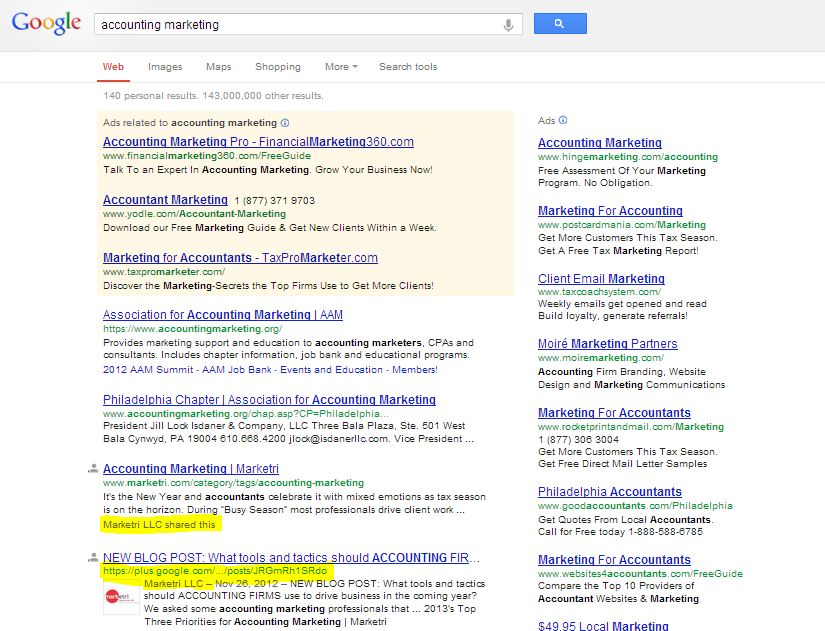


 Now, that was a social promotion.
 The promotion also offered a way to leverage MVP's longtime relationship with Wambach, who has rocketed up the ranks of the Forbes 100 of athletes and is now working for the likes of Nike and Gatorade. She is a polished, powerful advocate for wellness, and she was clearly the perfect spokesperson for a promotion about "Game Changers." (Side note: working with Abby is a true pleasure. This is the second time I've worked with her personally, and I can attest that she is completely real and relatable – and sincerely dedicated to the cause of wellness. I even got to play goalie against her briefly during some downtime. The results were as bad, or perhaps even worse, than you can imagine.)


 Do you make a family ritual out of grabbing Black Friday deals at 4am the day after Thanksgiving? Or do you despise the fact that American's blow past Thanksgiving to get to Christmas shopping? Either way, as a business person, Black Friday is fascinating.

 Are you trying to grow you business through social media? Social media is a very effective way to widen your influence and get the word out. There may be some mistakes though, that are getting in the way of a successful social media interaction.
 February 2012:
  If you haven't heard of StumbleUpon it's no big surprise; the site isn't anywhere near as popular as Facebook and Twitter. This is a real shame as it's a far more personalised and enjoyable experience than its more successful social media peers. StumbleUpon provides a simplistic, and addictive, service with one goal; to allow you to enjoy the very best of the internet. With this social media tool there's no spam or endless searching online; entertaining, informative, and relevant websites are all directed towards you based on personal preference. As a business tool you can connect into this and target your niche audience with great success.


 The time has come we get real once and for all on the human aspect and lack there of within the social landscape.
 The social ecosystem has nuts of all sizes.
  Be careful who you follow, listen to and what actions you take based on such. There is no short cut, magic pill or secret formula to success in social business and integrating social media into your business. Yes, there are best practices but you can not avoid needing to know your audience and how you can inspire and connect with them to help them achieve their goals if you want real results.
 Practice what you preach.
 There is only one way to do social media and that is the way that works for you and your business.
 We are excited to dig deep into this conversations over the coming weeks and months with our #GetRealChat community. We meet weekly via Twitter at 9pm et.
 This blog post is part of a new series titled "


 Screenshot courtesy of
 The need for proper nutrition is among the most primal. Yet in our own country, one in seven homes and one in five children in the United States are labeled as food insecure.
 Even though we’ve been through a lot of cheat and deceit, I believe that we people are still gullible. Come a new form of scam, and some of us may actually fall for it. This is because there are just so many things that drive us in life that the opportunities for tricking us by making use of those drives are virtually endless.

| You are subscribed to email updates from Social | Business 2 Community To stop receiving these emails, you may unsubscribe now. | Email delivery powered by Google |
| Google Inc., 20 West Kinzie, Chicago IL USA 60610 | |

Niciun comentariu:
Trimiteți un comentariu